

Disclosure: Tires Review Zone is reader-supported. As an Amazon Associate I earn from qualifying purchases, at no extra cost to you. Learn more.
The 1993 Chevy 3500 dually is a GMT400 work truck with dual rear wheels. It was built to tow and haul, and its tires are a big part of that job.
Get the size wrong and the problems stack up fast. The rear pair can rub, loads get carried unevenly, and wear speeds up. This guide gives the factory size and the checks that keep a dually safe.
Key Highlights
- The factory tire size is LT225/75R16, Load Range E, on 16-inch wheels.
- A dually runs six tires: two front and four rear in two dual pairs.
- The bolt pattern is 8×165.1, also written 8×6.5.
- The two tires in a dual pair must never touch each other.
- Confirm everything on the driver’s door jamb placard before you buy.
The Factory Tire Size: LT225/75R16
Chevrolet fitted the 1993 C/K 3500 dually with LT225/75R16 tires. That size applies at all six positions: two front tires and four rear tires in two dual pairs.
The truck rides on 16-inch wheels, front and back. If your truck wears something else today, a past owner changed it. The placard, not the current tires, is the source of truth.
| Item | Factory spec |
|---|---|
| Tire size | LT225/75R16 |
| Load range | E (10-ply rating) |
| Wheel | 16-inch dually wheels |
| Bolt pattern | 8×165.1 (8×6.5) |
| Overall diameter | About 29.3 inches |
| Tire positions | Six: 2 front, 4 rear duals |
Reading the Size
The LT stands for light truck. It marks a tire built with stronger construction for load work. The 225 is the tread width in millimeters.
The 75 is the aspect ratio. The sidewall height is 75 percent of the width. The R means radial construction, and 16 is the wheel diameter in inches.
Why Load Range E Matters
Load Range E is the 10-ply rating class. Tires in this class are built for the pressures and loads of a one-ton truck. A dually spreads weight over four rear tires, but each tire still has to carry its share.
Never drop below the factory load range on a truck that tows or hauls. Our guide to load range for a Chevy 2500 explains how the letter ratings compare.
Confirm the Size on Your Truck
A 1993 truck has had three decades to change hands. Wheels get swapped and tires get substituted. Confirm the factory spec before you buy anything.
Open the driver’s door and read the placard on the jamb. It lists the original tire size and the recommended pressures. The owner’s manual repeats the same data, and Chevrolet’s owner resources can help with vehicle information.
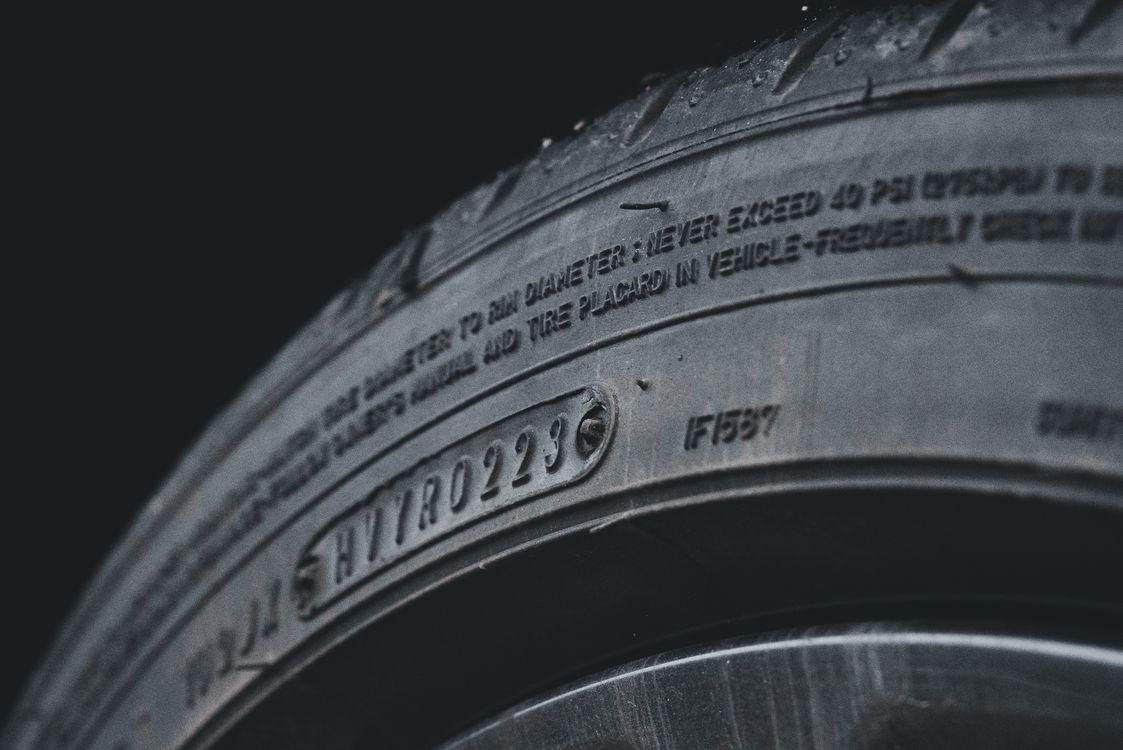
Then read the sidewalls on the truck. All six should show the same size and load range. If one position differs, plan to correct it.
The GMC Twin Shares the Same Spec
GMC sold the same truck as the Sierra 3500. It came off the same platform with the same dually setup. Its factory tire size is also LT225/75R16, with the same 8×165.1 bolt pattern.
So there is no separate GMC size to hunt for. Parts and tires interchange between the two badges. Just confirm your own truck’s placard, whichever badge it wears.
Wheels and the 8×165.1 Bolt Pattern
The 3500 dually uses eight lug nuts on a 165.1 mm circle. That pattern is also written 8×6.5, because 165.1 mm equals 6.5 inches.
Dually wheels are not ordinary truck wheels. The rear wheels are dished so a pair mounts together with the tires side by side. On many of these trucks the front wheels match the outer rear style, which helps with rotation.
Offset matters as much as the bolt pattern. The wrong offset can push the duals together or move them into the suspension. Keep stock-style wheels unless a specialist checks the full setup.
Why All Six Tires Must Match
The two tires in a dual pair share one job. They must roll at the same speed and carry the load evenly. That only works when both tires have the same diameter.
If one tire is taller, it carries more than its share. It runs hotter and wears faster. The shorter partner can drag and scrub.
Dual Spacing: The Pair Must Never Touch
The sidewalls of a dual pair need a clear gap. Under load, tires flex and bulge. If the pair touches, the rubbing builds heat and can destroy both tires.
Wider-than-stock tires eat into that gap. This is the main reason dually owners stay at or near the factory width. Check the gap with the truck loaded, not just empty.
Our guide to the 1997 GMC Sierra 1500 tire size covers the same GMT400 generation in a lighter truck. The lesson carries over: tire sizes work as a system, not as single corners.
Going Bigger: What Actually Fits
Some owners want a taller tire for looks or clearance. The common step up is LT235/85R16. It is slightly narrower and about 31.7 inches tall, roughly 2.4 inches above stock.
That height change alters gearing and the speedometer, like on any truck. It also raises the load floor and can crowd the front wheel wells at full lock. Plan for those trade-offs, not just the look.
Wide tires are the risky direction on a dually. Extra width closes the gap between the rear pair. Some owners use spacers to win the gap back, but spacers add their own load and failure concerns on a truck that hauls heavy.
The safe route is simple. Stay stock, or make one modest step and have a dually-experienced shop check spacing under load. Semi-truck sizes you may see mentioned online, like 22.5-inch fitments, belong to a different class of vehicle and do not bolt onto this pickup.
Choosing a Tire Type
With size and load range fixed, pick the tread type for your work. Highway tires suit towing and pavement. They run quietly and wear evenly under load.
All-terrain tires add grip on gravel, mud, and job sites. They are widely offered in LT225/75R16 with Load Range E. Keep the same type at all six positions.
Winter tires help in real snow and cold. Fit them as a full matched set, and keep the load range. Commercial traction tires are another option for trucks that work all year.
Pressure, Rotation, and Care
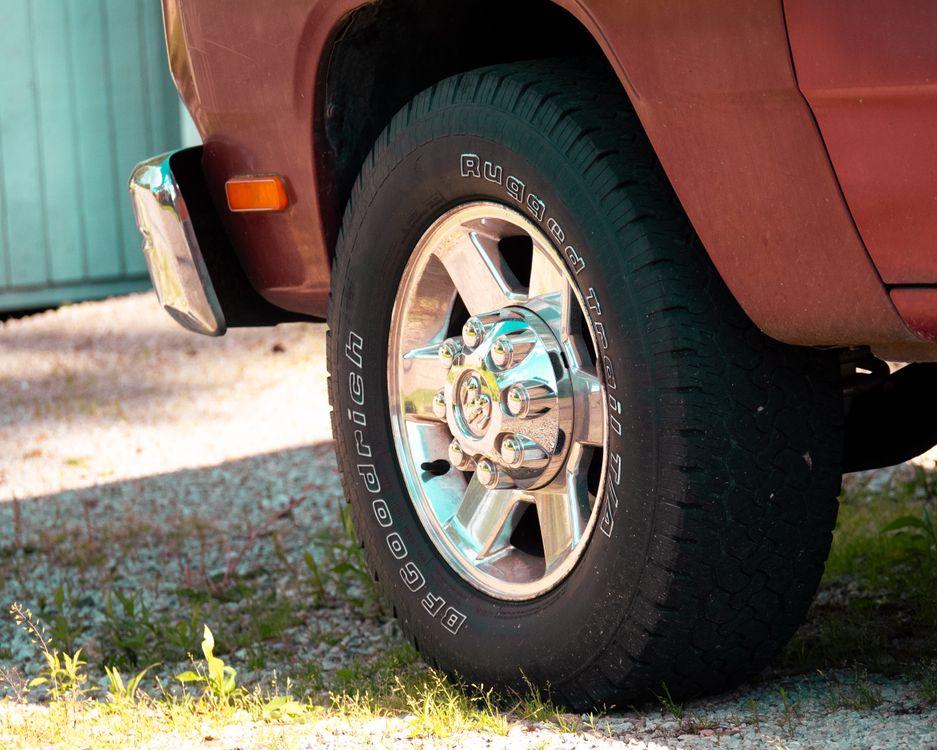
Run the pressures printed on the door jamb placard. Rear pressures are set for the dual setup. The maximum figure on the sidewall is a ceiling, not a target.
Check all six tires monthly, with the tires cold. The inner duals are easy to forget, and a soft inner tire overloads its partner. A long valve stem or an extension makes the inner valve reachable.
Rotate on a regular schedule with a dually-aware pattern. Ask the shop to keep matched pairs together and to check dual spacing at every rotation. If you change tire size, our guide to calculating tire pressure for bigger tires shows how to reset pressures by load.
Age matters on an older truck, too. The U.S. Tire Manufacturers Association publishes tire care basics, and NHTSA’s tire safety pages cover aging and recalls. Cracked or very old tires should come off, whatever the tread looks like.
Warning Signs to Watch For
One tire in a dual pair wearing faster than its partner is a red flag. It usually means a size, pressure, or diameter mismatch. Fix the cause before it eats both tires.
Shiny rub marks on the facing sidewalls mean the pair is touching under load. That needs attention right away. Heat from rubbing can fail a tire without much warning.
Vibration that grows with speed, cracks between tread blocks, and sidewall bulges also call for a shop visit. On a truck that tows, small tire problems become big ones fast.
Conclusion
The 1993 Chevy 3500 dually tire size is LT225/75R16, in Load Range E, on 16-inch wheels. Keep all six tires matched, keep the duals apart, and confirm everything against the placard. Do that, and the truck will tow and haul the way Chevrolet built it to.
Frequently Asked Questions
Can you use different tire sizes on a 1993 Chevy 3500 dually?
No. All six tires should match in size, type, and load range. A mismatched dual pair shares load unevenly, runs hot, and can rub.
What load range does a 1993 Chevy 3500 dually need?
Load Range E. It is the factory class for this one-ton truck and for the towing and hauling work it was built to do.
Are all-terrain tires available in LT225/75R16?
Yes. This is a common work-truck size, offered in highway, all-terrain, winter, and commercial tread types. Just keep Load Range E and fit a matched set.
What is the bolt pattern on a 1993 Chevy 3500 dually?
It is 8×165.1, also written 8×6.5. That means eight lug nuts on a 6.5-inch circle.
How often should you rotate tires on a dually?
Follow the schedule in your owner’s manual. Many owners rotate at every oil change, and the shop should keep dual pairs matched and check spacing each time.