
Disclosure: Tires Review Zone is reader-supported. As an Amazon Associate I earn from qualifying purchases, at no extra cost to you. Learn more.
A flat tire rarely picks a good moment. It happens on the way to work, on a dark road, or far from the nearest tire shop. A repair kit in the trunk can turn that bad moment into a short delay.
The problem is choice. Plug kits, sealant kits, and compressor kits all promise to get you moving again, but they do very different jobs. The right kit depends on your vehicle, your tires, and the kind of driving you do.
This guide walks through the choice step by step. You will learn what each kit type can and cannot fix, what a good kit should include, and when no kit is the right answer at all.
Start With Your Vehicle and Tire Type
A repair kit has to match the tire it will fix. A kit that suits a small car may struggle with a heavy truck tire. Start by checking what your vehicle actually runs.
Look at the tire sidewall or the door placard and note the size. Bigger, heavier tires need stronger tools and more plugs. A compact kit built for small car tires can bend or break on a stiff truck tire.
Tubeless or Tube-Type?
Almost every modern car, truck, and SUV runs tubeless tires. Plug kits and sealant kits are made for tubeless tires only. They seal the hole from the tread side, and the tire’s own air pressure helps hold the repair.
Some motorcycles, older vehicles, and many bicycles still use inner tubes. A plug will not fix a tube. Those tires need a patch on the tube itself, or a new tube.
Cars, Trucks, and Motorcycles Are Different
Cars and SUVs are the easiest case. A standard plug kit or a sealant and inflator kit covers most nail and screw punctures in the tread.
Trucks that tow or haul need heavier-duty tools. Look for metal T-handle tools instead of cheap plastic ones, and carry extra plugs. Motorcycle riders need the smallest kits of all, because storage space is tiny and the tires are narrow.
The Main Types of Tire Repair Kits
Plug Kits
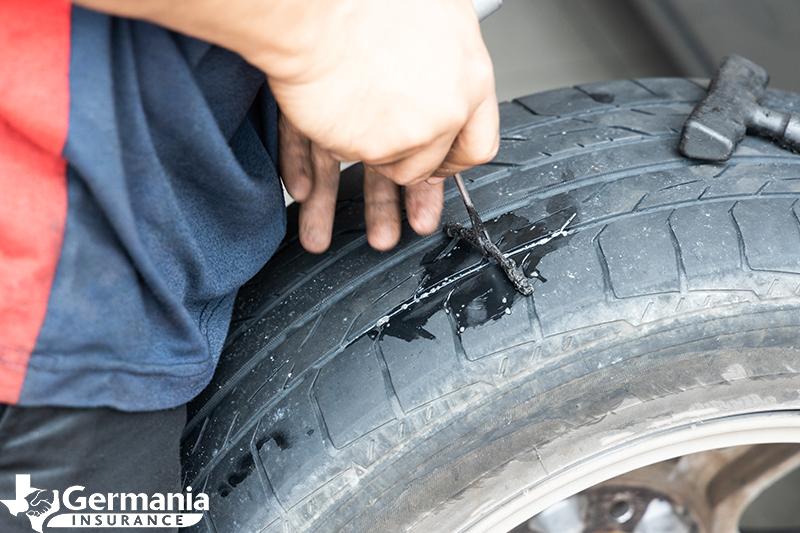
A plug kit pushes a sticky rubber strip into the puncture from outside the tire. It includes a reamer to clean the hole, an insertion tool, plugs, and usually rubber cement. It is small, cheap to replace, and fast to use.
A plug kit only works on tread punctures from nails or screws. For step-by-step instructions, see our guide on fixing a flat tire with a tire repair kit.
Sealant and Inflator Kits
These kits pump liquid sealant into the tire, then refill it with air. Many new cars come with one instead of a spare tire. They are the easiest option for a driver who does not want to handle tools.
The limits are real. Sealant handles small tread punctures only, it makes a mess inside the tire, and a shop needs extra time to clean it out. The seal is temporary, and the sealant has an expiry date you should check.
Kits With a Compressor
Some kits add a small 12-volt compressor, and many plug kits are sold bundled with one. Air matters, because a plugged tire that stays low on air will overheat and fail. A compressor also lets you top up a slow leak and reach a shop safely.
Whatever kit you choose, finish the job at the right pressure. Our guide to whether bigger tires need more PSI explains why the door placard, not the sidewall, sets your number. The Toyo load and inflation tables show how pressure supports the load a tire carries.
Patch and Plug-Patch Kits
Patch kits work from inside the tire. The tire comes off the wheel, the inside is cleaned and prepared, and a patch or a combined plug-patch unit seals the injury. That is workshop work, not roadside work.
These kits suit home garages with tire-changing gear and small repair shops. Most drivers should leave inside repairs to a professional with the right tools.
What a Good Kit Should Include
A good plug kit is more than a box of plugs. Look for a sturdy reamer and insertion tool with metal T-handles, plenty of plug strips, and rubber cement. Cheap plastic handles can snap the first time you push a plug into a stiff tire.
Useful extras make the job calmer. Pliers help pull the nail out, a small knife trims the plug flush, and a pressure gauge confirms the repair holds air. A hard storage case keeps everything together in the trunk.
Check the kit once or twice a year. Plugs dry out, cement hardens, and sealant expires. A kit you cannot trust is just extra weight in the trunk.
Match the Kit to How You Drive
City drivers who are never far from a shop can carry a simple kit. A basic plug kit, or the sealant kit that came with the car, is enough for a nail near home.
Highway and rural drivers need more. If help is an hour away, carry a plug kit plus a compressor, and learn how to use both before you need them. Off-road drivers should carry extra plugs, because rocks and thorns can cause more than one puncture on the same trip.
Think about your spare, too. If your car has no spare at all, the kit is your only plan. Choose a complete one, and replace the sealant before it expires.
Plug vs Patch: The Honest Difference
You may read that an outside plug or patch is just as strong as a repair from inside. That is not true, and it matters for your safety. An outside plug fills the hole, but nobody has inspected the inside of the tire for hidden damage.
The only repair the tire industry treats as proper is a plug-patch done from inside. The tire comes off the wheel, the injury is checked from within, and the repair seals both the hole and the inner liner. The U.S. Tire Manufacturers Association’s tire care and safety guidance sets the same limits: repairs belong in the tread area, for punctures up to a quarter inch across.
So use a plug kit for what it is. It is a way to get moving again and reach a shop. It is not the final repair.
Roadside Kits vs Professional Kits
Roadside kits are built for one job: get you off the shoulder and to a shop. They are compact, they work with the wheel still on the vehicle, and every repair they make is temporary.
Professional kits assume the tire comes off the wheel. They include patches, plug-patch units, buffing tools, and vulcanizing cement. In trained hands, they make the only repair that counts as permanent.
When to Skip the Kit and Get Help
No kit can fix a sidewall cut, a bulge, or a shredded tire. Driving on a flat for even a short distance can ruin the inside of the tire beyond repair. In those cases, the safe move is the spare or a tow truck.
NHTSA’s tire safety information explains how to spot damage that makes a tire unsafe. If you see cords, deep cracks, or a bubble in the sidewall, do not try to plug it.
Do Not Forget the Spare
A kit is a backup, not a replacement for a spare. Plugs fail, sealant expires, and some damage cannot be repaired at the roadside. A sound spare covers every case a kit cannot.
Check your spare’s pressure whenever you check the others, and learn how it comes off before you need it. Truck owners can follow our guide to 2007 GMC Sierra spare tire removal to see how an under-bed spare hoist works.
Conclusion
The right tire repair kit is the one that matches your vehicle, your tires, and your driving. For most drivers, that means a solid plug kit with metal tools, a small compressor, and a gauge, all in one case.
Buy it before you need it, and learn how it works on a calm day. Treat every roadside repair as temporary, because a proper inside repair at a tire shop is the finish line, not the plug.
Frequently Asked Questions
Can I use the same repair kit for a car and a motorcycle?
Often, yes, if both run tubeless tires. Motorcycle tires are narrower, so compact plug kits made for bikes pack smaller. Tube-type tires need a tube patch or a new tube instead.
Are tire repair kits worth it if I have a spare tire?
Yes. Plugging a nail hole is faster than changing a wheel on a busy shoulder. The kit also saves your spare for the damage that cannot be plugged.
How long can I drive on a plugged tire?
Only as long as it takes to reach a tire shop for a proper repair. Drive gently, keep your speed moderate, and check the pressure when you stop. A plug is a temporary fix, not a repair to forget about.
Can a repair kit fix a sidewall puncture?
No. Sidewall and shoulder damage cannot be repaired safely by any kit. That tire needs replacement, and the spare or a tow is the right answer.
Do sealant kits damage TPMS sensors?
Some sealants can coat or clog the sensor, and makers label their sealant as sensor-safe or not. Check the label before you buy. Tell the tire shop you used sealant, so they can clean the wheel and sensor during the proper repair.