
Disclosure: Tires Review Zone is reader-supported. As an Amazon Associate I earn from qualifying purchases, at no extra cost to you. Learn more.
Your tires are the only part of your car that touches the road. Good tire care keeps them safe, durable and fuel-efficient.
The good news is that tire care is simple. A few short checks each month cover almost everything that matters.
This guide walks through the full routine: pressure checks, rotation, tread depth, alignment, damage inspection, spare care and seasonal storage.
Check Tire Pressure Every Month
Correct inflation is the single most important part of tire care. Under-inflated tires wear faster, use more fuel and handle worse.
Check pressures at least once a month, and always before a long trip. Measure when the tires are cold, because driving heats the air inside and raises the reading. First thing in the morning is ideal.
Always use the figures in your owner’s manual or on the driver’s door-jamb placard. The number molded into the sidewall is a maximum pressure, not the target for daily driving. NHTSA’s tire safety guidance explains why correct inflation matters so much.

What Wrong Pressure Does to Your Tires
Under-inflation makes the tire flex too much as it rolls. That flexing builds heat, and heat can lead to a blowout. It also raises rolling resistance, so fuel consumption climbs.
Over-inflation shrinks the contact patch that grips the road. Grip falls, the ride turns harsh, and the center of the tread wears faster than the edges.
How to Check Pressure the Right Way
Remove the valve cap and press a gauge squarely onto the valve stem. Read the figure, then compare it with the recommended pressure.
If the reading is low, add air in short bursts and recheck as you go. If it is high, press the valve pin briefly to release a little air. Refit the valve caps firmly, because missing caps let in dirt that can cause slow leaks.
Repeat the check on all four tires, and include the spare. For timing and technique, see our guide to when to check tire pressure.
If your car has a tire pressure monitoring system, treat a warning light as a prompt to check all four tires with a gauge. The light flags a problem, but only a gauge tells you the actual figures.
Rotate Your Tires for Even Wear
Front and rear tires wear at different rates. On a front-wheel-drive car, the front tires steer, drive and carry most of the braking load, so they wear fastest.
Rotation moves each tire to a new position so the tread wears evenly across the whole set. Most drivers should rotate roughly every 8,000–10,000 km (5,000–6,000 miles), and many pair the job with an oil change so it is easy to remember.
Rotation is also a natural moment for a closer look at each tire. With the wheels off, a technician can spot tread damage and confirm the wear pattern before small problems grow.
Common Rotation Patterns
The usual patterns are front-to-back, a cross pattern, and front-to-back on the same side for directional tires. Your owner’s manual shows the right interval and pattern for your car, so follow that first.
Measure Tread Depth and Watch for Wear
Tread channels water away from the contact patch. As the tread wears down, wet grip fades and braking distances grow.
Check the depth with a tread gauge, or use the wear indicators molded into the grooves. When the tread sits level with those bars, the tire is done. Plan replacement before the tread reaches the legal minimum, not after.
A coin gives a rough check at home: push a penny into a groove with Lincoln’s head facing down, and if you can see the top of his head, the tread is worn low. A gauge is more precise, so confirm borderline results with one.
Independent tire tests and reviews show how strongly tread depth affects wet stopping distances. Look at the wear pattern too: wear on one edge, in the center, or on both edges often points to an alignment or inflation problem.
Keep Wheels Aligned and Balanced
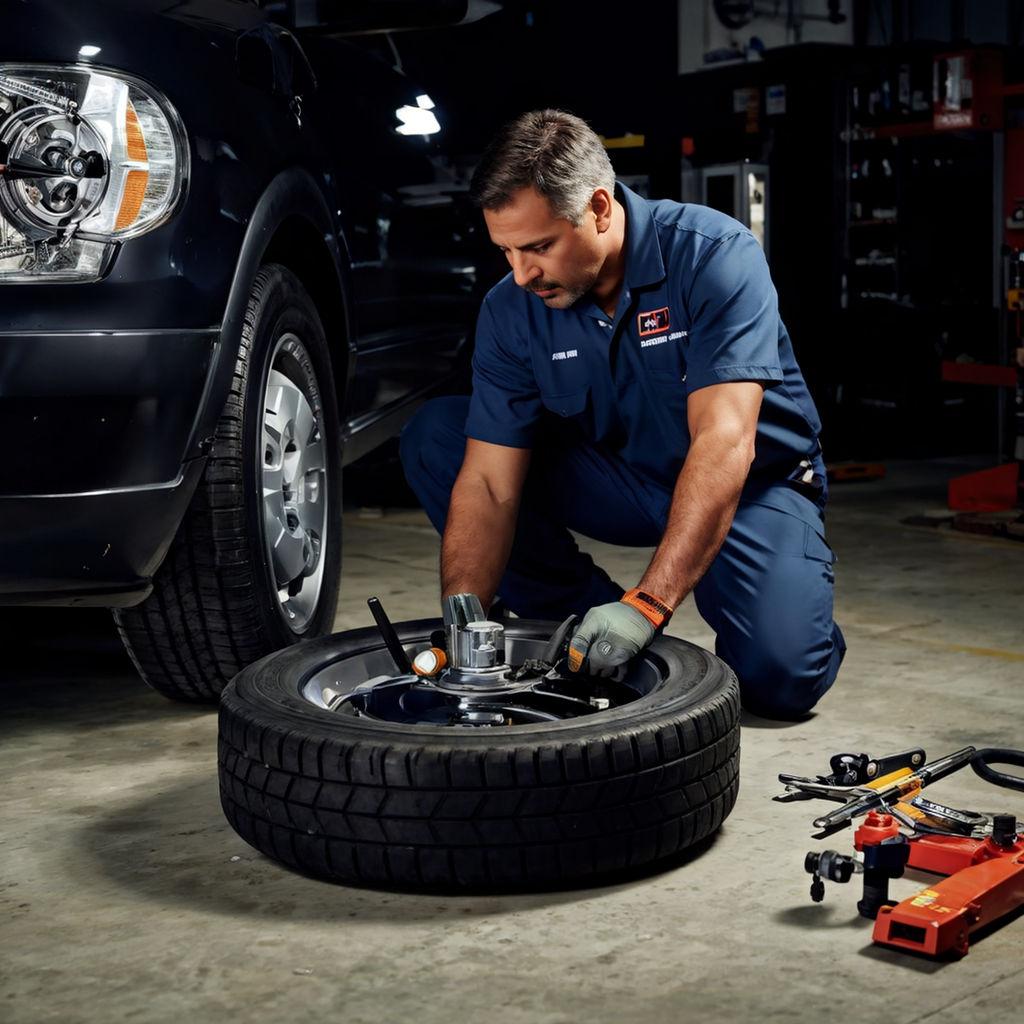
Wheel alignment sets the angles at which your tires meet the road. Balancing spreads weight evenly around the wheel so it spins without wobbling.
Poor alignment causes uneven wear and can make the car pull to one side. Unbalanced wheels cause vibration, usually felt through the steering wheel at speed. Our guide to tire balance and alignment explains both jobs in detail.

Signs Your Alignment Is Off
Watch for a steering wheel that sits off-center on a straight road. Drifting or pulling to one side is another clear sign.
One tire wearing faster than the rest also points to trouble. Have alignment and balance checked when these signs appear, and after any hard pothole strike. Book a check when new tires are fitted too, so the new set starts life wearing evenly.
Inspect for Damage and Handle Punctures Safely
Give your tires a close visual check every month. Look for cuts, cracks, bulges and objects stuck in the tread. Check the valve stems and caps while you look, because cracked stems and missing caps can leak air slowly.
A bulge in the sidewall means internal structural damage. Replace that tire promptly, because it can fail without warning.
If you find a nail or screw in the tread, do not pull it out at the roadside. Driving on it or yanking it out can turn a repairable puncture into a dangerous blowout. Fit the spare or call for help, then let a professional assess the tire.
Only punctures in the tread area can usually be repaired safely. Sidewall damage means replacement, and major manufacturers such as Bridgestone give the same advice in their tire care material. Our beginner’s guide to dealing with a flat tire walks through the safe roadside steps.
Do Not Forget the Spare Tire
A spare only helps if it is inflated and sound. Check its pressure whenever you check the other four tires.
Inspect it for cracks and aging, especially if it has sat unused for years. Remember that space-saver spares carry strict speed and distance limits — typically 80 km/h (50 mph) — and are meant to get you to a repair shop, not to finish a long trip. If your car carries a full-size spare, ask whether it should join the rotation pattern so it wears with the set.
Seasonal Swaps and Storing Tires Properly
If you run separate summer and winter sets, swap them when average daily temperatures consistently cross about 7 °C. Winter rubber stays pliable in the cold, while summer compounds harden and lose grip.
Store the off-season set in a cool, dry, dark place. Keep it away from direct sunlight and ozone sources such as electric motors, which age rubber early.
Mark Positions Before You Swap
Chalk each tire’s position — front-left, rear-right and so on — before removal. Refitting them in a planned pattern keeps wear even across the seasons.
Clean each tire and check its pressure before storing. Wash off winter road salt first, because salt and grime age rubber and corrode wheels. Stack unmounted tires flat, and stand mounted sets upright, turning them now and then so they do not develop flat spots. Keep them away from solvents, fuels and sharp objects.
A Simple Tire Care Schedule
Put these checks into your routine and they soon become second nature. This table sums up the whole guide.
| Task | How often | Why it matters |
|---|---|---|
| Check tire pressure | Monthly, and before long trips | Safety, fuel economy, even wear |
| Rotate tires | Every 8,000–10,000 km | Evens out wear, extends tire life |
| Measure tread depth | Monthly | Maintains wet grip and legal compliance |
| Check alignment and balance | Yearly, or when symptoms appear | Prevents uneven wear and vibration |
| Inspect for damage | Monthly, and after potholes | Catches cuts, bulges and punctures early |
| Check the spare | Monthly | Makes sure it works when needed |
Key Takeaways
- Monthly cold pressure checks are the highest-value tire care habit.
- Rotate your tires every 8,000–10,000 km (5,000–6,000 miles) for even wear.
- Replace tires before the tread reaches the legal minimum.
- Alignment and balancing fix uneven wear, pulling and vibration.
- Never pull an embedded object out yourself; get punctures repaired professionally.
- A maintained spare completes the picture.
Frequently Asked Questions
Why is professional puncture repair important?
A professional can inspect the inside of the tire, not just the hole you can see. Some punctures look small outside but have damaged the inner structure. Only a proper inspection shows whether a repair is safe, and sidewall damage can never be repaired.
What are the dangers of driving with the wrong tire pressure?
Low pressure makes the tire flex and overheat, which can end in a blowout. It also wastes fuel and wears the shoulders of the tread. High pressure shrinks the contact patch, cuts grip and wears the center of the tread.
Are there special tire care tips for changing seasons?
Yes. Swap summer and winter sets when average daily temperatures consistently cross about 7 °C. Before storing the off-season set, clean it, check its pressure and chalk each tire’s position. Store the set somewhere cool, dry and dark.
Conclusion
Proper tire care is mostly routine: check, rotate, measure, align and inspect. None of it is difficult, and little of it costs money.
Build these habits into your driving life and your tires will reward you with safer handling, lower fuel bills and a longer service life.