

Disclosure: Tires Review Zone is reader-supported. As an Amazon Associate I earn from qualifying purchases, at no extra cost to you. Learn more.
A flat tire always seems to happen at the worst moment. The good news is that many flats are simple tread punctures, and a tire repair kit can get you moving again.
A kit is not magic, though. It only works on small punctures in the tread, and the fix is temporary. This guide walks you through the job step by step, and it is honest about the damage no kit can fix.
Safety First: Get Off the Road Safely
Your safety matters more than the tire. Pull well off the road onto flat, firm ground, as far from traffic as you can manage.
Turn on your hazard lights and set the parking brake. If you have a warning triangle or flares, place them behind the vehicle.
If the spot feels unsafe, do not start work. Stay in the car with your seat belt on and call for help instead. No repair is worth standing next to fast traffic.
Check Whether the Tire Can Be Repaired at All
Not every flat can be fixed with a kit. Before you open the tools, look at where the damage is and how big it is.
A kit repair is only for a small puncture in the tread area, the part of the tire that touches the road. The hole should be no larger than about a quarter inch across.
The USTMA tire care and safety guidance sets the same limits for proper repairs. Punctures outside the tread zone, or larger than that size, are not repairable at all.
Damage That Must Never Be Plugged
Never plug a hole in the sidewall. The sidewall flexes constantly, and a plug there will not hold.
Never plug the shoulder, the curved edge where the tread meets the sidewall. Treat cuts, bulges, and long tears the same way. That tire needs replacement, not repair.
Driving on a flat also destroys tires from the inside. If you drove far on it, have a shop inspect it, even if the hole looks small.
What Is in a Tire Repair Kit?
There are two common kit types. A plug kit seals the hole with a sticky rubber string, pushed in from outside the tire.
A typical plug kit holds a reamer tool, an insertion tool, several plug strings, and sometimes rubber cement. Pliers help too, and many drivers add a small pressure gauge.
The second type is a sealant and inflator kit. It pumps sealant into the tire through the valve, then inflates it. Many newer cars carry this instead of a spare.
Both types are temporary fixes. They exist to get you to a tire shop, not to replace one.
Find the Leak
Start by looking closely at the tread. A nail, screw, or shard is often still stuck in the rubber, and it marks the spot for you.
Roll the car a short distance if you need to see the whole tread. Work slowly and check both edges of the tread band.
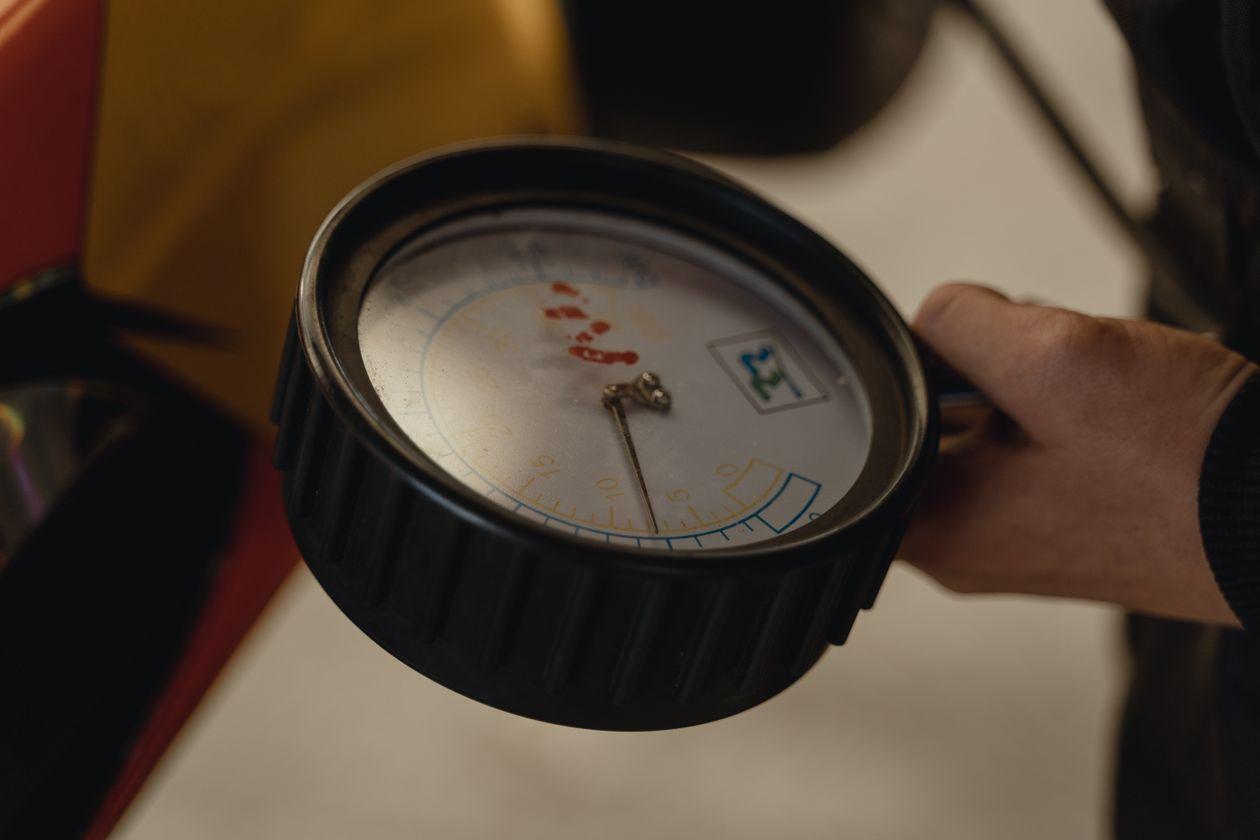
If nothing shows, use soapy water. Brush or spray it over the tread and watch for bubbles that keep forming in one place.
A quiet hiss can also guide you. Mark the spot once you find it, because a fully flat tire can be hard to read later.
How to Plug a Tire, Step by Step
You can usually plug a tire without removing the wheel, as long as you can reach the hole easily. If access is poor, fitting the spare is the safer plan.
1. Remove the Object
Grip the nail or screw firmly with pliers. Pull it out straight, in the same line it went in.
Note the angle as it comes out. The plug needs to follow that same path to seal well.
2. Ream the Hole
Push the reamer tool into the hole and work it in and out a few times. This cleans the hole and roughens the rubber so the plug can grip.
The hole should feel snug around the tool. If it is loose or torn, the damage is too big for a plug.
3. Insert and Trim the Plug
Thread a plug string through the eye of the insertion tool, centered so both ends are even. Coat it with rubber cement if your kit includes it.
Push the tool into the hole until only a short stub of plug sticks out. Then pull the tool straight back out, leaving the plug behind.
Trim the stub close to the tread with a knife or cutters. It should sit just above the surface, not waving in the air.
4. Inflate and Check
Inflate the tire with your compressor or pump. Fill it to the pressure on the driver’s door placard, not the maximum marked on the sidewall.
Our guide to whether bigger tires need more PSI explains why the placard number rules. It applies after every repair, whatever the tire size.
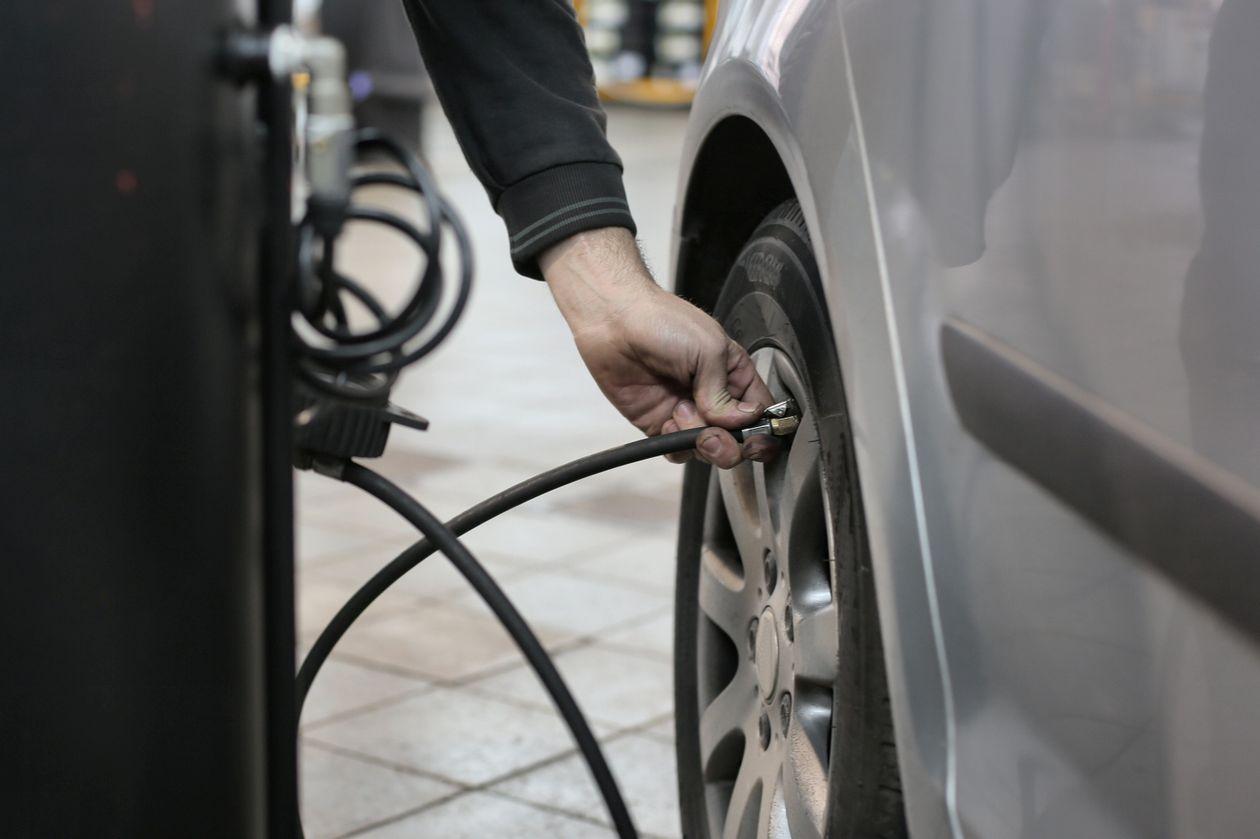
Brush soapy water over the plug. Steady bubbles mean it is still leaking, and the repair has not taken.
Using a Sealant and Inflator Kit
Sealant kits work differently, so follow the maker’s directions for your exact product. The steps on the can or unit always win over general advice.
Most kits connect to the valve stem, push sealant in, and then inflate the tire. You then drive a short distance right away, which spreads the sealant around the inside.
One common question is whether to pull the nail out first. For a plug kit, yes, the object must come out. For sealant, check the label: many products seal around the object or ask you to remove it only once the tire holds air.
Tell the tire shop you used sealant when you arrive. The tire must be cleaned inside before a proper repair, and the pressure sensor may need attention too.
A Plug Is Only a Temporary Fix
However neat it looks, an outside plug is not a finished repair. It seals the hole from one side only, and nobody has checked the inside of the tire.
Drive gently and head for a tire shop as soon as you reasonably can. The NHTSA tire safety pages are clear that proper repair starts with taking the tire off the wheel.
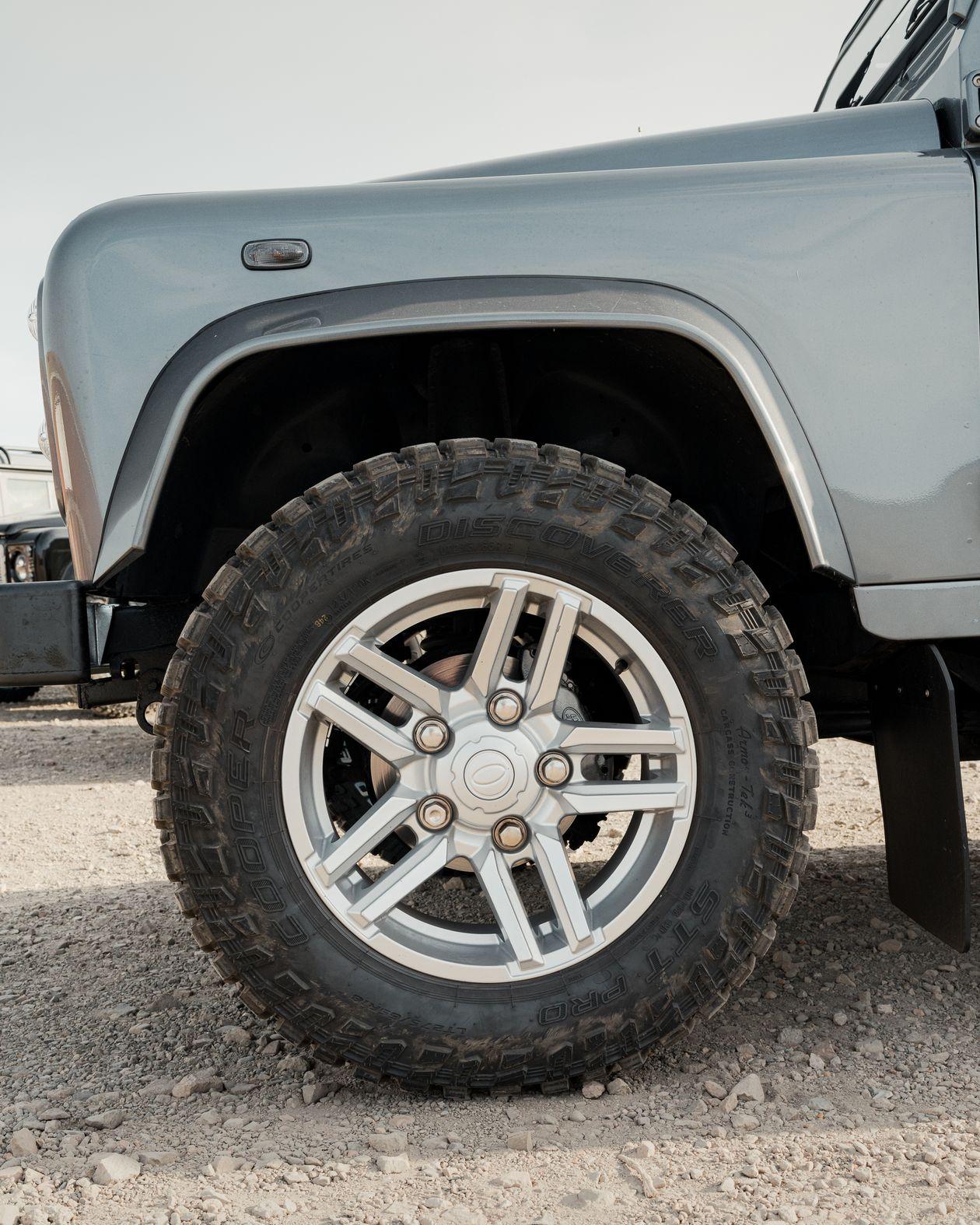
The proper fix is a plug-patch fitted from inside. A shop removes the tire, inspects the inner liner, and seals the hole through both layers.
Can a plug fall out? Yes, if the hole was too big, the plug was fitted poorly, or the damage was near the shoulder. That is one more reason to treat it as a short-term measure and keep checking the pressure.
If the Kit Cannot Help
Some flats end the discussion. Sidewall damage, a bent wheel, or a shredded tire means the kit stays in its box.
Fit the spare if your car has one and you can work safely. Our guide to removing a spare tire shows the hoist system many trucks use, and the steps are similar on other vehicles.
Skip the folk remedies you may read about, like stuffing the hole with cloth or tape. They do not seal a tire, and a sudden failure at speed is far worse than a tow.
After the Repair: Checks for the Next Few Days
Check the pressure again the next morning, with the tire cold. A slow loss means the plug is passing air.
Keep an eye on that corner for several days. If the pressure keeps dropping, go back to the shop rather than adding a second plug.
For loads or non-standard sizes, the Toyo load and inflation tables show how pressure and load connect. Our walkthrough of how to calculate tire pressure shows the same method step by step.
And book that proper shop repair now, not someday. A plug that holds today can still be hiding damage inside the tire.
Conclusion
A tire repair kit handles one job well: a small tread puncture, fixed carefully, to get you to a shop. Check the damage is repairable, plug it in the right order, and inflate to the placard.
Respect the limits, and the kit earns its place in the trunk. Sidewall damage, big holes, and unsafe spots are spare-or-tow problems, every time.
Frequently Asked Questions
Is a tire repair kit a permanent fix?
No. Both plug kits and sealant kits are temporary. The permanent repair is a plug-patch fitted from inside the tire, after a shop has inspected it off the wheel.
How long can I drive on a tire plug?
Only as long as it takes to reach a tire shop, driving gently. There is no safe distance guarantee with an outside plug, so arrange the proper repair as soon as you can.
Should I take the nail out before using a sealant kit?
Follow the product label. Plug kits need the object removed first. Sealant kits differ: many seal with the object in place, or ask you to remove it once the tire holds air.
Can a tire plug fall out?
Yes. A plug can work loose if the hole was too large, the plug was not seated well, or the puncture sits near the shoulder. Keep checking the pressure until a shop has repaired the tire properly.
Can I plug a tire without removing the wheel?
Usually, yes, if the hole is in the tread and easy to reach. Good access matters, because the tools must follow the angle of the puncture. If you cannot reach it well, fit the spare instead.