

Disclosure: Tires Review Zone is reader-supported. As an Amazon Associate I earn from qualifying purchases, at no extra cost to you. Learn more.
A Duramax truck spends much of its life running empty. No trailer, no load in the bed, just the daily drive.
Pressure still matters on those days. The air in your tires carries the truck, steers it, and stops it.
This guide shows how to set unloaded tire pressure on a Duramax the right way. You will learn where your real number lives, how to check it, and when towing changes it.
What “Unloaded” Means
“Unloaded” simply means the truck is carrying nothing extra. The bed is empty, no trailer is hooked up, and the cab holds just you and your usual gear.
That is the lightest your truck ever runs. It is also how most Duramax owners drive most of the time.
Problems start when pressure set for a heavy load stays in the tires after the load is gone. The truck rides harsh, grips less, and wears the center of the tread.
Why the Right Pressure Matters
Pressure decides the size and shape of the contact patch, the small area of rubber that actually touches the road. That patch handles every start, stop, and turn.
Too little air lets the tire flex too much. Flex builds heat, heat damages the tire from the inside, and the shoulders of the tread wear fast.
Too much air shrinks the patch and lifts the edges of the tread. Grip drops, the ride turns harsh, and the center of the tread wears out early.
A Duramax adds weight where it matters. The diesel engine puts much more load over the front axle than a gas engine does, so the front tires work harder and suffer sooner when pressure runs low.
Right pressure also protects fuel economy and steering feel. Our guide to whether bigger tires need more PSI explains the same load-and-pressure logic in more depth.
Where to Find Your Number
Your truck already tells you its unloaded pressure. Open the driver’s door and read the tire placard on the door jamb.
The placard lists the factory tire size and the cold pressure for the front and rear tires. On heavy-duty trucks those two numbers often differ, so read both.
Placard vs. Sidewall
Do not use the number molded on the tire sidewall as your target. That figure is the maximum pressure the tire can safely hold, not the pressure your truck was designed to run.
Running at the sidewall maximum in an empty truck is a common cause of a harsh ride and center tread wear. The placard, matched to your truck and its factory tires, is the honest guide.
Your owner’s manual repeats the same values and adds guidance for loaded driving. If the placard and a tire shop disagree, trust the placard for stock tires.
Model year and configuration change the numbers, too. A 2500HD and a 3500HD, or a single-rear-wheel and a dually, can list quite different values even in the same year.
How to Check Pressure the Right Way
Check pressure when the tires are cold. “Cold” means the truck has sat for at least a few hours, or has been driven less than a mile or so.
Driving heats the air inside the tire and raises the reading. A hot reading can look several pounds higher than the true cold pressure.
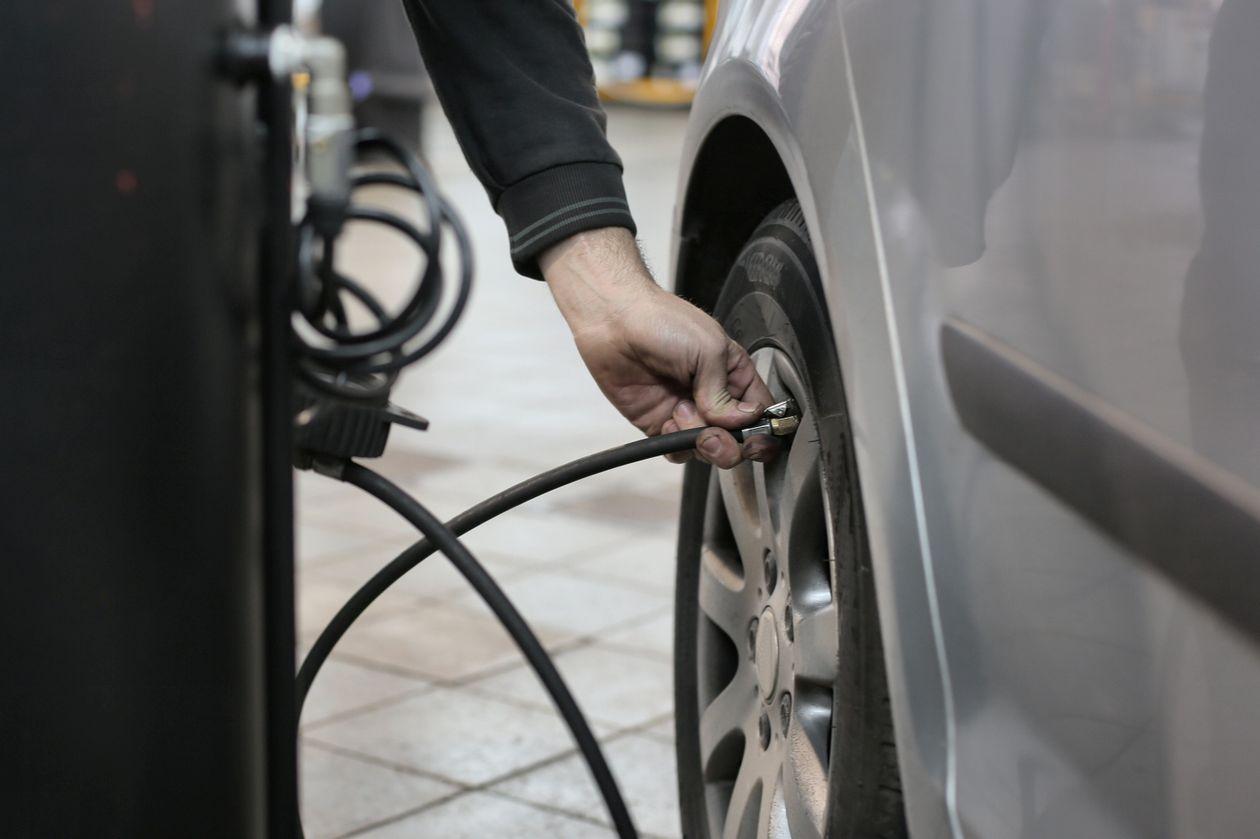
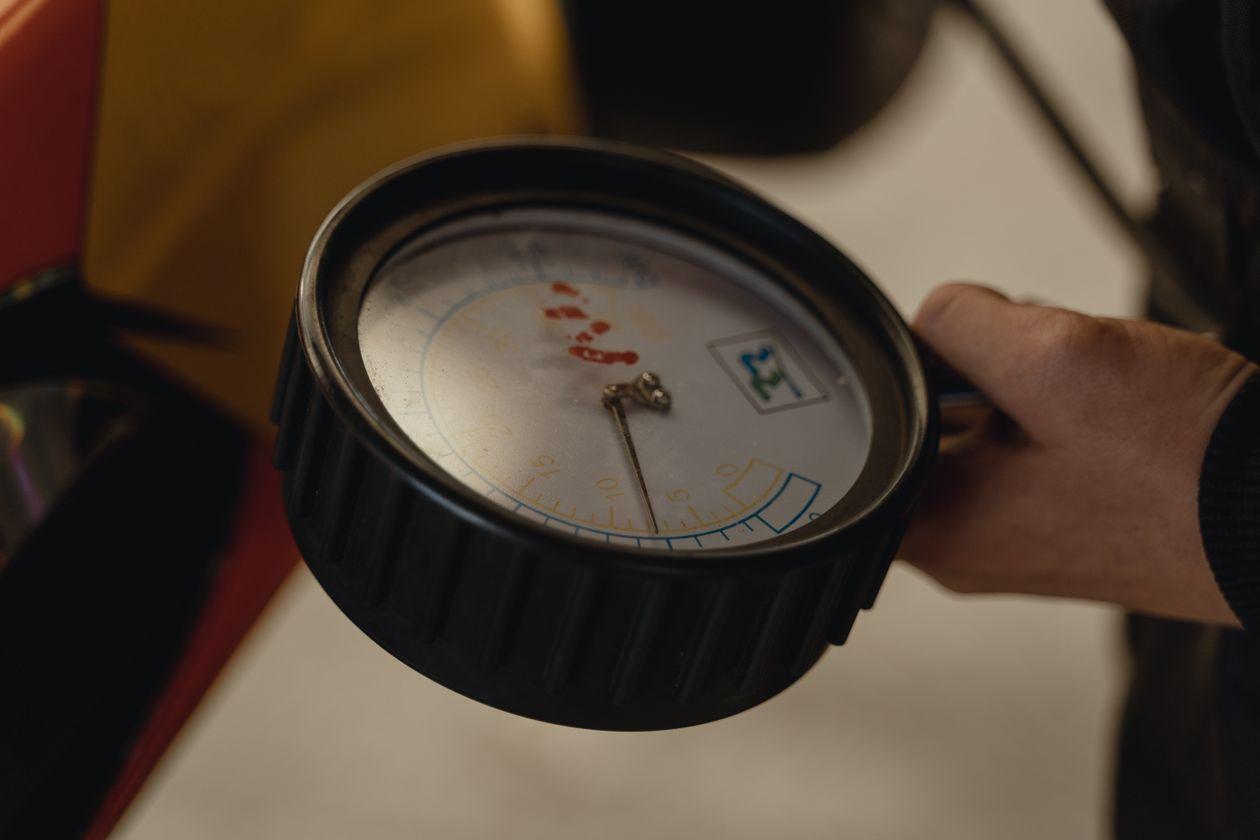
Use a decent gauge. Press it straight onto the valve stem so no air escapes, and read the number.
Compare each tire with its placard value, front and rear separately. Add air in short bursts and recheck, or let a little out if you overfilled.
Check all four tires, and look at the spare now and then as well. A flat spare is no help on the day you actually need it.
Keep the valve caps on, too. They keep dirt and moisture away from the valve core, and a missing cap invites a slow leak.
Do Not Rely on TPMS Alone
The tire pressure monitoring system is a warning, not a gauge. On most trucks the light comes on only when a tire is well below its target — often around 25 percent low.
By the time the light shows, the tire has been underinflated for a while. A monthly gauge check catches slow losses long before the light does.
Check at least once a month and before any long drive. The USTMA tire care and safety guide gives the same advice for every vehicle.
Unloaded vs. Towing: When to Add Air
Load changes everything. When you hook up a trailer or fill the bed, the rear tires carry much more weight, and they need more pressure to carry it safely.
Fifth-wheel and gooseneck trailers load the rear axle the most. If you tow often, confirm your rear pressure against the placard’s loaded value, not the unloaded one.
Many Duramax placards list a higher rear pressure for full loads, and load and inflation tables show the pressure each load needs. The Toyo load and inflation tables are a good example of how pressure follows load.
When the trailer comes off, air back down to the unloaded setting. Leaving towing pressure in an empty truck is the very mistake this guide works against.
If you changed tire sizes along the way, the math shifts a little. Our guide to calculating tire pressure for bigger tires walks through it step by step.
Signs Your Pressure Is Off
Too Low
- Steering feels heavy or slow to respond
- The truck wanders or feels soft in turns
- The outer edges of the tread wear faster than the center
- Fuel economy slips for no clear reason
A badly underinflated tire can also overheat at highway speed. That is the failure that matters most, and it gives little warning.
Too High
- The ride feels harsh over small bumps
- The center of the tread wears faster than the edges
- The truck feels skittish or light in the rain
- You hear more road noise than usual
Looks can fool you, though. A tire can be well low and still look fine, which is why the gauge — not your eye — settles the question. The NHTSA tire safety pages make the same point.
Why Pressure Drifts
Tires lose air slowly all the time. A drop of roughly one PSI a month through the rubber is normal, even with no leak at all.
Temperature moves the number too. As a rough rule, pressure changes by about one PSI for every 10 degrees Fahrenheit the air temperature swings.
Cold mornings are the usual surprise. A tire set right on a warm afternoon can read low at dawn, and the TPMS light may greet you at breakfast.
Real leaks come from nails and screws, tired valve stems, and corrosion where the tire meets the wheel. If one tire keeps losing air faster than the others, have it inspected.
TPMS Light On, but Tires Look Fine
Start with the gauge anyway. One tire may be low enough to trigger the light while still looking normal from the driver’s seat.
Cold weather can also trip the light on a tire that was borderline. Air it to the placard value, drive a little, and the light should clear on its own.
If the pressures are right and the light stays on, suspect the system itself. Sensor batteries wear out with age, and a sensor can fail or get damaged during tire work.
After a rotation or new tires, the truck may need the sensor relearn procedure from the owner’s manual. Follow the manual — never pull fuses or disconnect parts to kill the light.
A Simple Routine That Works
- Check cold, once a month, with the same gauge
- Keep your front and rear placard numbers on a card in the glove box
- Reset to unloaded pressure the day the trailer comes off
- Look at the tread wear pattern at every check
- Have any tire that keeps losing air inspected promptly
The routine is the same whatever tires you run. Our Nitto Grappler tire pressure guide shows how the same placard-first method applies to popular all-terrain tires.
Conclusion
Unloaded pressure is not a special Duramax secret. It is the placard number, checked cold with a real gauge, and reset whenever the load changes.
Do that, and your tires wear evenly, the truck rides and steers as it should, and the warning light stays a stranger. Five minutes a month is cheap insurance for a truck you count on.
Frequently Asked Questions
What PSI Should My Duramax Run When Unloaded?
There is no single number for every Duramax. The right unloaded pressure is the cold value on your driver’s door placard — front and rear — for your truck and its stock tire size.
Two trucks that look alike can list different values. Always read your own placard.
Is 80 PSI Right for a 3/4-Ton Truck?
Usually not for daily driving. Eighty PSI is the maximum pressure of many Load Range E tires — the sidewall number.
Some placards do call for high rear pressure at full load. That is a loaded setting, not an everyday one.
Does the Penny Test Check Tire Pressure?
No. The penny test checks tread depth, not pressure.
If the top of Lincoln’s head shows between the tread ribs, the tread is worn to about 2/32 of an inch and the tire needs replacing. Pressure still needs a gauge.
Should I Change Pressure Before a Long Highway Trip?
Set the tires to the placard values while cold, before you leave. Do not bleed air from hot tires at a rest stop — the higher hot reading is normal and expected.
Can High Pressure When Unloaded Really Wear Tires Unevenly?
Yes. Too much air balloons the tread, so the center carries most of the load.
The center wears first, and you replace the tire while the edges still look new. The fix costs nothing: run the placard pressure when the truck is empty.
What if My Placard Is Missing or Unreadable?
Your owner’s manual lists the same values, and a GM dealer can look them up from your VIN. Do not copy numbers from another truck or a forum — close is not the same as correct for your configuration.