

Disclosure: Tires Review Zone is reader-supported. As an Amazon Associate I earn from qualifying purchases, at no extra cost to you. Learn more.
A flat tire can ruin a trip in minutes. A good tire repair kit turns that same puncture into a short stop at the roadside.
The best tire repair kits all share one honest limit. They fix small punctures in the tread, and nothing more.
This guide compares the best-known kits and explains the three repair methods. It also covers what a kit cannot do, so you never trust one too far.
What a Tire Repair Kit Can and Cannot Do
Are repair kits any good? The fair answer is yes and no. A kit handles a small nail or screw hole in the tread well, and that covers most everyday punctures.
No kit can fix a cut sidewall, a split shoulder, or a tire driven flat until its structure is damaged. Damage like that means a replacement tire, and the NHTSA tire safety pages explain why such tires must not be repaired.
Every roadside repair is temporary, whichever kit you choose. A plug or a sealant fill gets you to a tire shop, where the lasting repair can be done properly.
After any repair, inflate to the pressure in the owner’s manual and on the door placard. Follow the tire sidewall and manufacturer specifications, and never guess.
A kit also has to match your tires. These kits are made for tubeless tires, which covers most modern cars.
Kits age, too. Sealant dries out, adhesive loses strength, and CO2 cartridges can leak down. Open your kit once or twice a year and replace anything expired or used.
Two Types of Kit: Emergency and Comprehensive
Emergency kits are the simple end of the market. They carry a plugging tool, patches and cement, plus instructions.
Comprehensive kits add more help. They include sealants and an inflator or compressor, so you can seal the hole and re-inflate on the spot.
Sealant-and-inflator kits sit between the two types. They seal and inflate in one step, but they give you no plugs for a larger hole.
Cheaper kits cut corners you will feel at the roadside. Expect no compressor, weaker tools and poorer plugs. A sealed tire still needs air, so the compressor matters as much as the plugs.
The Best Tire Repair Kits Compared
These are the kits drivers ask about most. Each one takes a different approach, so match the type to how you drive.
| Kit | Type | What the kit includes |
|---|---|---|
| Slime Smart Spair | Sealant and inflator kit | Sealant with an inflator to re-inflate the tire |
| Fix-A-Flat S60 | Sealant kit | Puncture sealant, a CO2 cartridge for inflation, plugs for larger holes and an inflation hose |
| Nokian Tyres Flat Tire Repair Kit | Plug kit | Plugging compound for small holes, plus an inflation hose |
| Michelin Emergency Flat Tire Repair Kit | Comprehensive kit | Compressor, sealant, plugs and instructions in a carrying case |
| Stop & Go Mini Air Compressor Kit | Compressor kit | Compressor similar to the Slime kit, with a light for working in the dark |
Sealant Kits: Fast but Messy
Sealant is the fastest fix and the messiest. Slime’s sealant also comes as two 16-ounce bottles for a light-duty option, while commercial-grade sealants serve fleets and the heavier-duty GenTire kit suits rough daily use.
Tell the tire shop that sealant is inside the tire before they break the bead. It saves a mess, and it saves a surprise.
Plug Kits: Slower but Cleaner
Plug kits take longer to learn, but they leave the tire easier to repair properly afterward. Many drivers keep a plug kit as their main option for that reason.
Which Type Suits You?
City drivers with a good spare tire can travel light with a basic plug kit. Drivers without a spare, or who cover long rural miles, should carry a comprehensive kit with a compressor.
Plug, Patch or Sealant: The Three Repair Methods
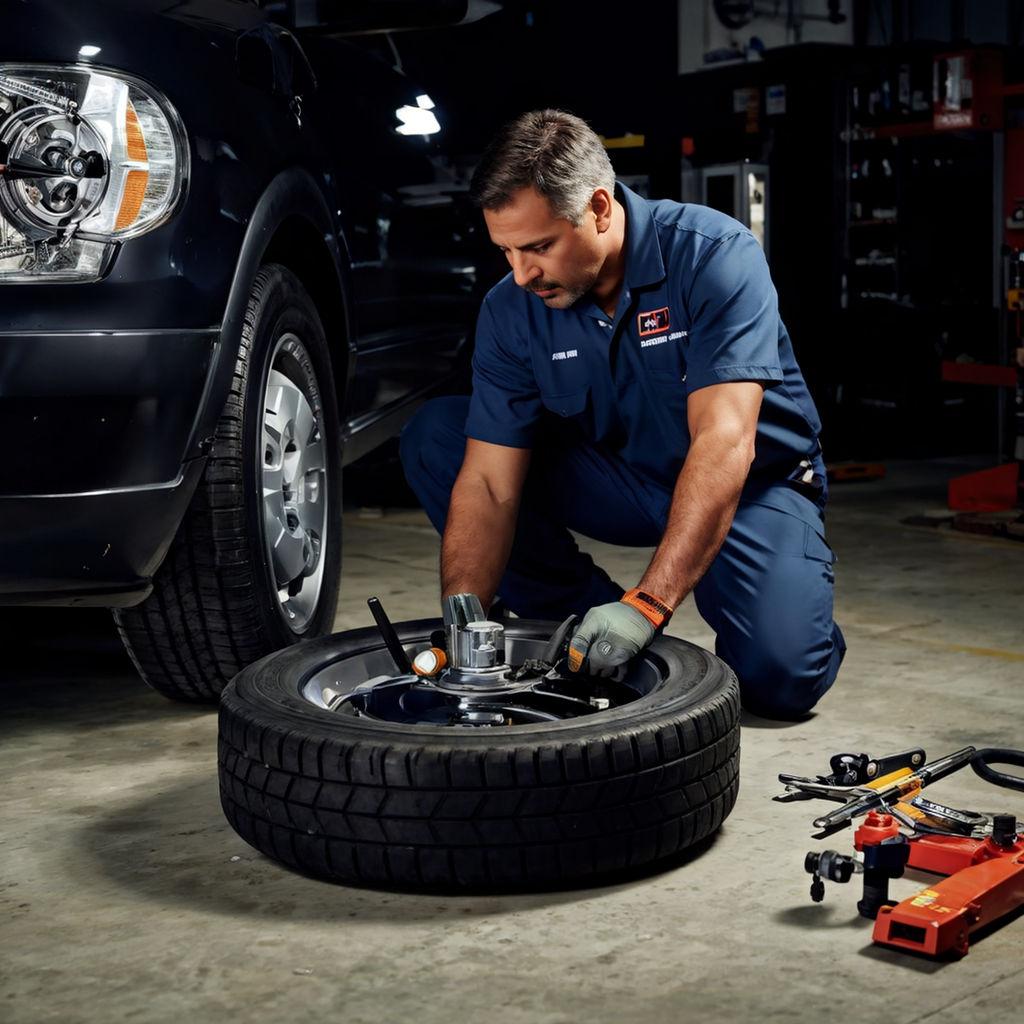
Patching is done from inside the tire once it is off the rim. Plugging is done from outside, at the roadside, with the wheel still on the car.
Vulcanization is a workshop process. It bonds new rubber into the injury, and it is not a roadside job.
Plugs are quicker and simpler, while a patch seals the inner liner better. The lasting repair combines both: a plug-patch unit fitted from inside the tire, which is the standard the U.S. Tire Manufacturers Association sets out.
Professional kits carry a plugger, reamer, rasp tool and adhesive. That preparation cleans and fills the hole correctly, and it separates a repair that holds from one that leaks by morning.
Good kits make that preparation easy. Look for a sturdy rasp and insertion tool, spare plugs, and cement that is still in date.
Two rules matter most. Use a plug kit only on the tread area, and never stack plugs in one injury. Either mistake can turn a repairable tire into scrap.
Choosing Plugs, a Compressor and the Rest of the Kit
Inside a plug kit, the plugs come in rubber and nylon. Rubber costs less, while nylon is tougher. Round plugs are cheaper but take more work to fit, so the tubeless-style strings most kits supply are the practical default.
How many plugs should you carry? A couple covers ordinary driving. Carry four or five for large tires or frequent rough-road miles.
Independent test results at TyreReviews are a useful cross-check on any kit or tire claim before you buy. If you are unsure of the roadside steps themselves, our beginner’s guide to dealing with a flat tire walks through the sequence.
Add a simple pressure gauge to any kit you choose. A compressor’s built-in dial is only approximate, and the repaired tire needs the placard figure, not a guess.
Familiarize yourself with the contents before you need them. A kit you have never opened is a puzzle at the worst possible moment.
Store the kit somewhere reachable, not buried under luggage. On a dark, wet shoulder, you want it in your hand in seconds.

Off-Road and Heavy-Duty Repair Kits
Off-road driving changes the calculation. Help is further away and punctures are more likely, so stronger tools join the compressor and plugs. Recovery gear such as a winch belongs to the same preparation.
The heavy-duty shortlist is practical: the Slime Tire Plug Kit, a Fix-A-Flat plug kit with an inflator and ten self-sealing plugs, the compact Stop & Go Pocket Tire Plugger, and an AAA kit.
Larger tires need more of everything: more plugs, a stronger compressor, and more patience. Check the kit’s stated tire sizes before a trip, not after a puncture.
Match the kit to the terrain honestly. A glovebox plug kit is fine for city driving, but it is not preparation for gravel roads a hundred miles from the nearest tire shop.
After the Repair: Pressure Checks and Proper Inspection
Once you are rolling again, treat the repair as borrowed time. Drive gently, keep the speed down, and follow our guide to when to check tire pressure so the repaired tire is re-checked cold the next morning.
Keep the speed down on the way to the shop, and avoid long highway runs on a fresh plug. The repair has not been inspected yet, so treat it gently.
Watch the repaired tire over the next few days. A slow pressure drop means the repair is leaking and needs attention.
Then fold the repair into normal care. Our complete tire care guide covers the inspections that catch a failing repair early.
At the first opportunity, a tire shop should remove the tire, inspect the inside, and fit a proper plug-patch. That visit is part of the repair, not an optional extra.

Key Takeaways
- Every roadside repair is temporary; have it inspected and finished properly by a tire shop.
- Tread punctures can usually be plugged or sealed; sidewall damage cannot be repaired at all.
- A compressor matters as much as the plugs, because a sealed tire still needs air.
- Use one plug per hole; stacking plugs weakens the repair.
- Re-inflate to the placard pressure and check it again the next day.
- Practice with the kit at home, in daylight, before you need it at midnight.
Frequently Asked Questions
Can tire repair kits fix all types of punctures?
No. Kits are made for small punctures in the tread of tubeless tires. Sidewall cuts, shoulder damage and large holes need a replacement tire, not a repair.
Are plug repairs permanent or temporary?
Temporary. A plug or sealant fill is a way to reach a tire shop safely. The lasting fix is a plug-patch fitted from inside the tire.
What should I check when buying a tire repair kit?
Check that the kit suits tubeless tires and small tread punctures. Look for sturdy tools, clear instructions, and a way to re-inflate, such as a compressor or a CO2 cartridge. A sealed tire with no air helps no one.
Conclusion
The best tire repair kit is the one that matches your driving and that you have actually practiced with. For most drivers that means a plug kit with a compressor; for off-road and fleet use, the heavy-duty options earn their space.
Respect the limits — tread only, one plug per hole, placard pressures, professional inspection afterward — and a small box in the trunk becomes one of the most useful things you carry.