

Disclosure: Tires Review Zone is reader-supported. As an Amazon Associate I earn from qualifying purchases, at no extra cost to you. Learn more.
How to choose winter tires? It is less about brand and more about matching the tire to your roads, your vehicle and your winters. A driver in Montreal who faces packed snow and ice for four months needs something different from a commuter in Ohio who sees a few slushy weeks. This guide walks through the types, the symbols that matter, how winter tires compare with all-seasons and when to buy for the best price.
Key takeaways: look for the three-peak mountain snowflake symbol, which means the tire passed a severe-snow traction test; an M+S marking alone does not. Studless tires suit most drivers, while studded tires help on glare ice but are only allowed on certain dates. Always fit four winter tires, never two. NHTSA’s tire safety pages cover general winter tire care.
Do winter tires really make a difference?
Yes, and the difference is biggest when you need to stop. Winter tires use a softer compound that stays flexible below about 7°C (45°F), deeper tread to bite into snow, and thousands of small slits called sipes that grip ice. Independent snow and ice tests consistently show winter tires stopping and turning much better than all-season tires on cold roads. All-wheel drive helps you get moving, but it does not help you stop or turn; tires do.
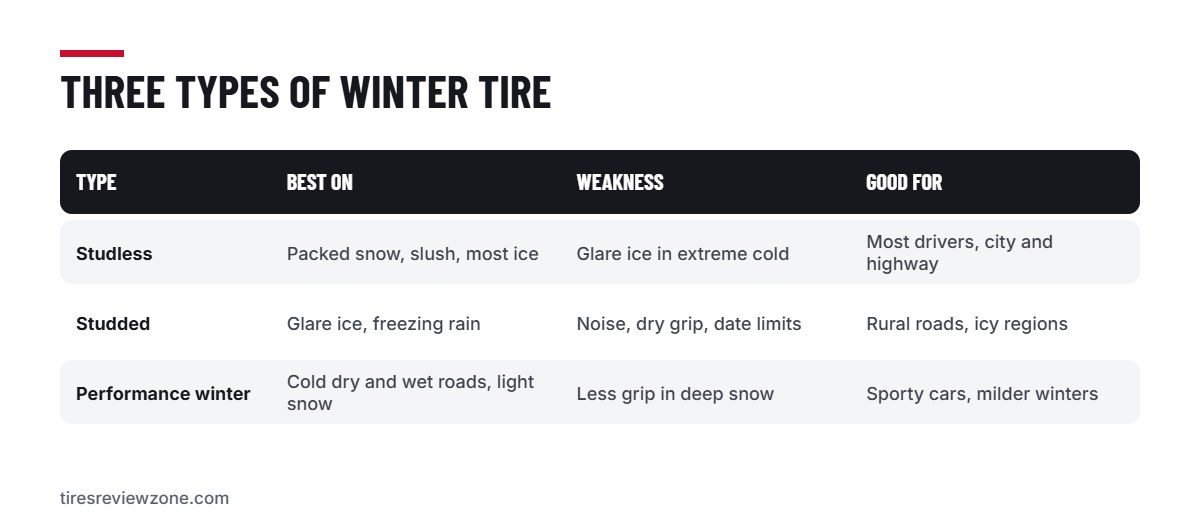
The three main types of winter tires
Studless (ice and snow) winter tires
Studless tires are what most drivers should buy. They rely on soft rubber, dense siping and micro-pores in the compound to grip ice and packed snow. They are quiet, legal everywhere all winter, and work well in cities where roads are plowed and salted but still icy in the mornings.
Studded winter tires
Studded tires have small metal or carbide pins in the tread. They give the best grip on glare ice and freezing rain, which makes them popular in rural areas and places like Atlantic Canada. The trade-offs are road noise, slightly worse grip on dry pavement and legal limits on when you can use them. Check the dates in our guide on when to put on winter tires.
Performance winter tires
Performance winter tires (sometimes called alpine tires) trade some deep-snow and ice grip for sharper handling and higher speed ratings. They suit sport sedans and drivers in areas with cold, mostly clear roads and occasional snow.
| Type | Best on | Weakness | Good for |
|---|---|---|---|
| Studless | Packed snow, slush, most ice | Glare ice in extreme cold | Most drivers, city and highway |
| Studded | Glare ice, freezing rain | Noise, dry-road grip, date limits | Rural roads, icy regions |
| Performance winter | Cold dry and wet roads, light snow | Deep snow and ice | Sport sedans, milder winters |
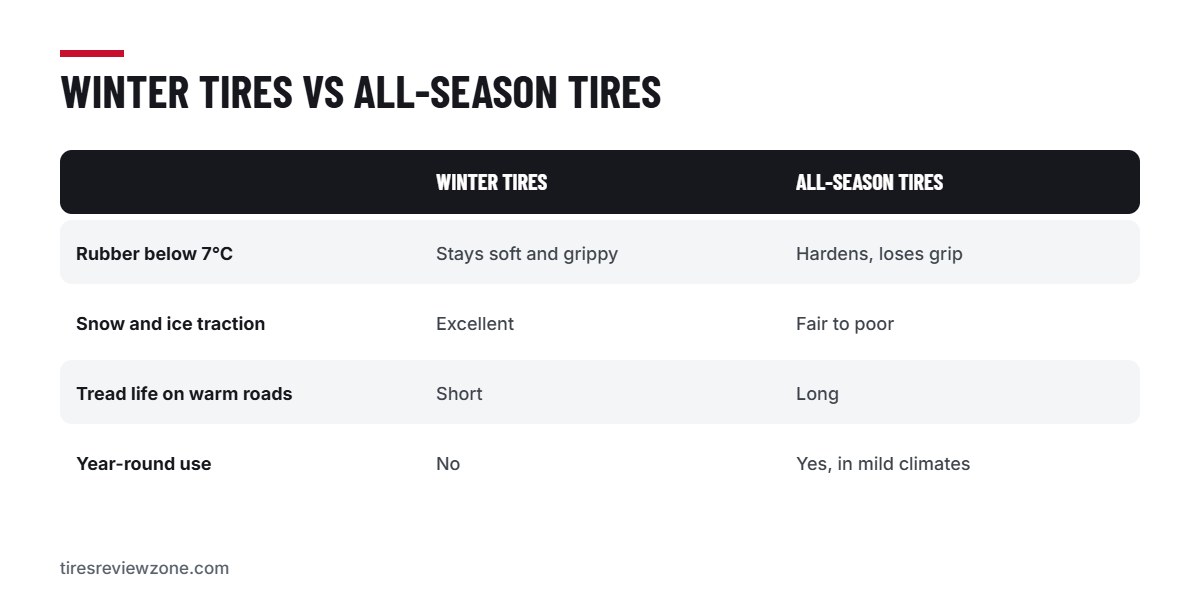
Winter tires vs all-season tires
| Winter tires | All-season tires | |
|---|---|---|
| Rubber below 7°C | Stays soft and grippy | Hardens, loses grip |
| Snow and ice traction | Excellent | Fair to poor |
| Tread life on warm roads | Short | Long |
| Year-round use | No | Yes, in mild climates |
| Cost | Second set plus changeovers | One set |
All-season tires are a compromise built for mild winters. All-weather tires are a newer middle ground: they carry the three-peak mountain snowflake symbol and can stay on year-round. They are a good choice for drivers in moderate climates who do not want to swap tires, but a dedicated winter tire still grips better in severe cold.
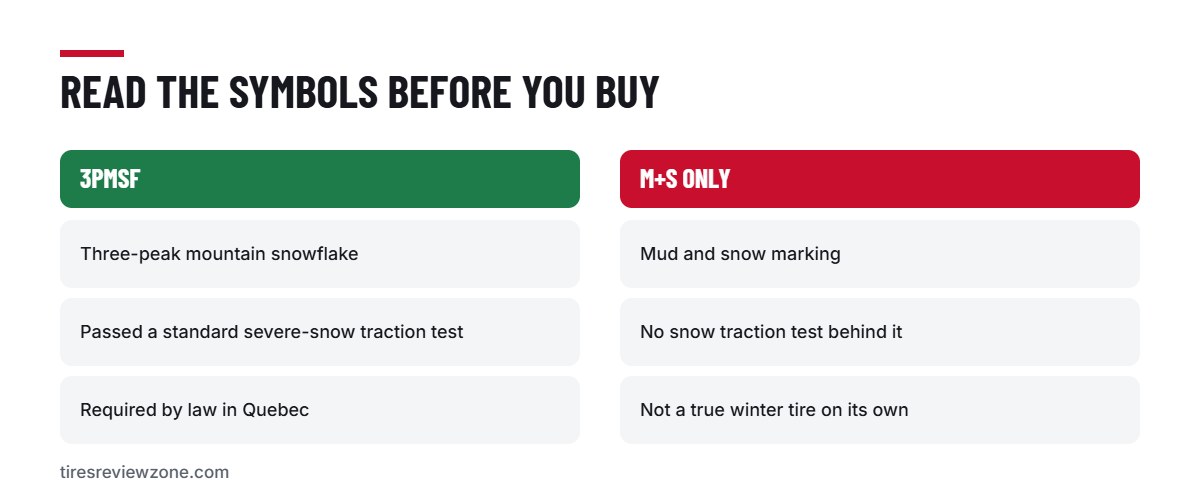
Read the symbols before you buy
- Three-peak mountain snowflake (3PMSF): the tire passed a standard severe-snow traction test. This is the symbol that matters; in Quebec it is legally required. The Tire and Rubber Association of Canada explains the test.
- M+S (mud and snow): describes the tread pattern only; it is not a winter performance rating.
- Studdable: the tread has molded holes so a shop can add studs.
How to choose winter tires for your vehicle
- Start with your door-jamb placard. Use the same size, load index and at least the speed rating your vehicle needs, unless you deliberately downsize.
- Consider a smaller wheel. Many drivers fit winter tires on one-inch-smaller steel or alloy wheels. A taller sidewall rides better over ruts and the tires are often cheaper. Keep the overall diameter within about 3 percent of stock.
- Match the type to your roads. Studless for most, studded for constant ice, performance winter for cold but clear roads.
- Trucks and SUVs need the right load rating. If you tow or haul in winter, choose an LT winter tire with the right load range; see our light truck tire buying guide.
- Buy four, never two. Mixing winter and all-season tires front to rear can make the car spin or plow straight ahead on ice.
- Check the date code. Winter rubber hardens with age; avoid tires that have sat in a warehouse for years.
Mounted on rims or swapped each season?
A second set of wheels costs more up front but makes each changeover cheaper and quicker, protects the tire beads and often pays for itself in two or three seasons. If your vehicle has direct TPMS, budget for sensors in the winter wheels or expect a warning light. Our guide to how tire pressure sensors work explains the options.
When is the best time to buy winter tires?
The best prices and the widest choice of sizes come in late summer and early fall, from about August to mid-October. Shops and manufacturers often run rebates then, and installation slots are easy to book. By November demand peaks, popular sizes sell out and you may wait weeks for an appointment.
End-of-season clearance sales in March and April can also save money, but sizes are limited and the tires will sit in storage until next winter.
How long do winter tires last?
Most winter tires last four to six seasons if they come off in spring. Replace them when tread reaches about 4.8 mm (6/32 in), because snow grip falls off sharply below that, or when the rubber is about six years old. Store them clean and out of sunlight; our winter tire maintenance tips cover the details. The USTMA tire care essentials list the monthly checks to keep them safe.
Frequently asked questions
Are winter tires worth it if I have AWD?
Yes. All-wheel drive helps you accelerate, but braking and steering depend on tire grip. Winter tires shorten stopping distances on snow and ice for AWD vehicles too.
What is the difference between studded and studless winter tires?
Studded tires have metal pins for maximum grip on glare ice but are noisy and limited by law to certain dates. Studless tires use soft rubber and siping, are quieter and can be used all winter.
Can I use all-weather tires instead of winter tires?
All-weather tires carry the three-peak mountain snowflake symbol and can be used year-round. They are a good compromise for moderate winters, but dedicated winter tires grip better in severe cold.
When is the cheapest time to buy winter tires?
Late summer and early fall, roughly August to mid-October, usually brings the best prices, rebates and size availability.
Should I put winter tires on only two wheels?
No. Always fit four winter tires. Mixing tire types between axles can cause the car to spin or slide on ice.