
Disclosure: Tires Review Zone is reader-supported. As an Amazon Associate I earn from qualifying purchases, at no extra cost to you. Learn more.

Winter tires are not just all-season tires with deeper grooves. They are built from the rubber up to grip at low temperatures, on snow, slush and ice. That is why they can make a bigger difference to winter safety than all-wheel drive: AWD helps you get moving, but only your tires help you stop and turn. Here is how winter tires work, how to spot a real winter-rated tire, and why you should take them off when spring arrives.
How winter tires work: key takeaways
- Winter tires use a softer rubber compound that stays flexible in the cold, when all-season rubber hardens.
- Deep tread, thousands of sipes and biting edges pack and grip snow and help on ice.
- Look for the three-peak mountain snowflake (3PMSF) symbol, which shows the tire passed a standard snow-traction test. “M+S” alone does not.
- A common rule of thumb is to fit winter tires when daytime temperatures stay below about 45°F (7°C), and remove them in spring.
- Always fit all four. Mixing winter and non-winter tires upsets handling.
1. The rubber compound: staying soft in the cold
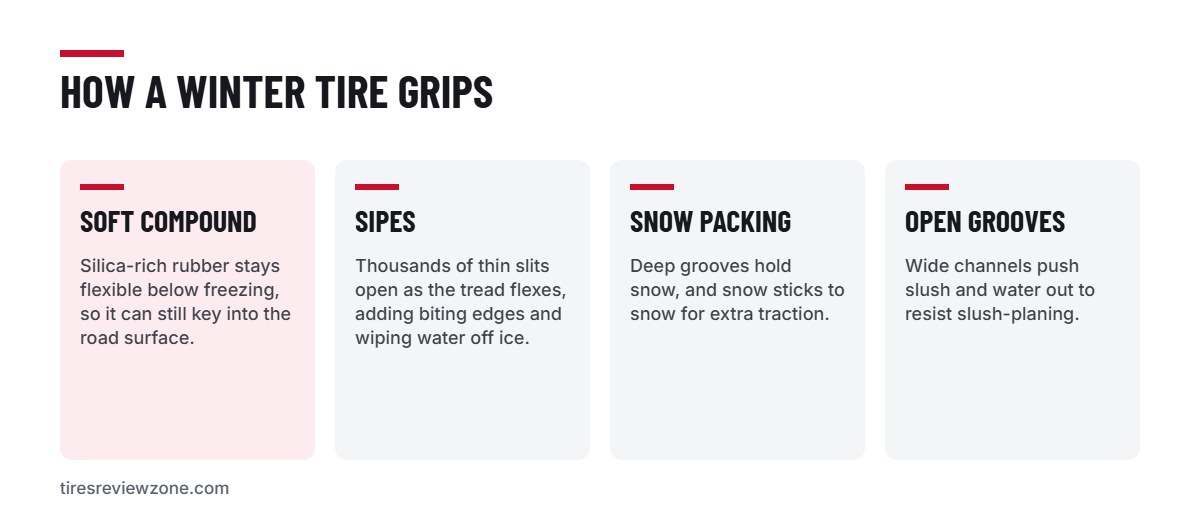
Tire rubber behaves differently with temperature. All-season and summer compounds start to stiffen as temperatures drop toward freezing, and stiff rubber cannot conform to the tiny bumps in the road surface, so grip falls. Winter tires use compounds, often rich in natural rubber and silica, that stay pliable well below freezing. That flexibility is what lets them grip cold, dry pavement as well as snow.
2. Tread design: built to bite
- Deeper tread depth gives room to pack snow into the grooves. Snow sticks to snow, so packed grooves actually add traction.
- Sipes are thin slits cut across the tread blocks. They open as the tire rolls, creating thousands of extra edges that bite into ice and snow and wipe away the thin film of water on top of ice.
- Wide, open grooves push slush and water out of the way to resist slush-planing.
- Directional or aggressive patterns help clear snow and drive the tire forward.
3. Studded vs. studless winter tires
| Studless winter tires | Studded winter tires | |
|---|---|---|
| How they grip ice | Soft compound, micro-pores and sipes | Small metal studs that dig into the ice |
| Best for | Most winter drivers: snow, slush, cold pavement and mixed ice | Frequent glare ice, rural and mountain roads |
| Downsides | Less bite on polished ice than studs | Noisier, can damage roads; restricted or banned in some states and countries |
Check your local laws before buying studded tires. Many places allow them only during set winter months.
4. The symbols: 3PMSF vs. M+S
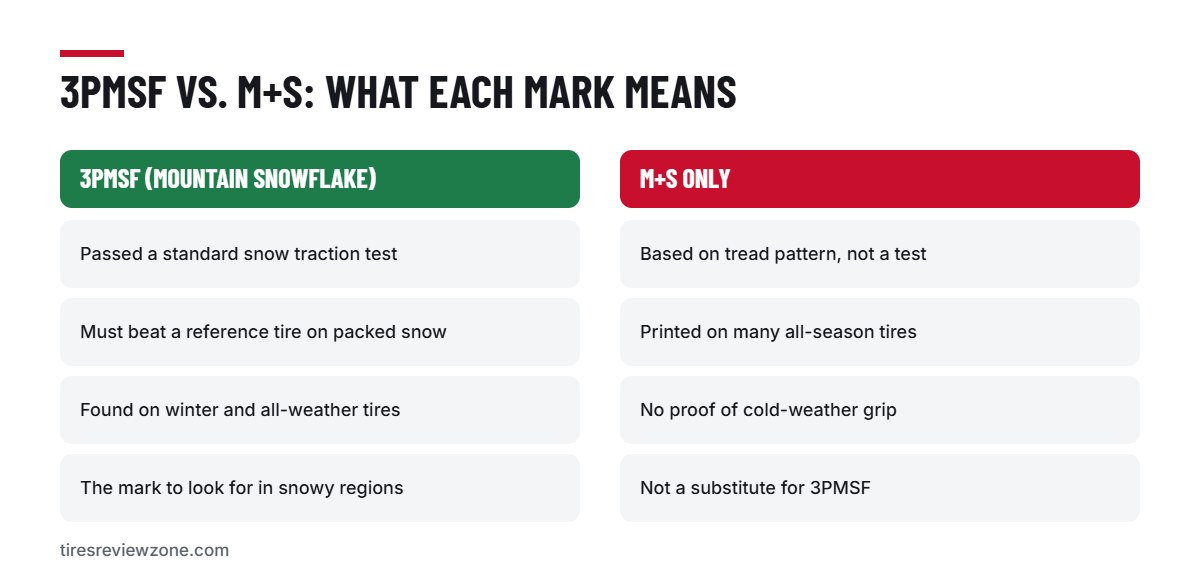
The three-peak mountain snowflake symbol means the tire met a standardized snow-traction performance requirement in testing against a reference tire. M+S (mud and snow) is based on tread design only and is printed on many all-season tires with no snow test behind it. For real winter performance, look for 3PMSF. The symbol is tied to the ASTM F1805 traction test on medium-packed snow; the Tire and Rubber Association of Canada explains how it works.
All-weather tires (as opposed to all-season) also carry the 3PMSF symbol. They are a reasonable middle ground for areas with moderate winters, but a dedicated winter tire still offers more grip in deep snow and on ice.
5. Why you should not run winter tires in summer
The same soft rubber that helps in the cold works against you in the heat. On warm pavement, winter tires wear quickly, feel less precise in corners, and usually need more distance to stop than summer or all-season tires. They also cost you fuel. Swap back to your regular tires when spring temperatures return, and store the winter set cool, dry and away from sunlight.
6. Ice: why it is the hardest test
Ice is at its most slippery close to the freezing point, around 32°F (0°C). The pressure and friction of a rolling tire melt a microscopic layer of water on the surface, and that film works like a lubricant between rubber and ice. Much colder ice, well below freezing, is actually grippier because it stays dry.
Winter tires fight that water film in three ways. Sipes open as the tread flexes and wipe the water away like a squeegee. Many studless compounds also contain tiny pores or water-attracting materials that soak up the film so the rubber can touch the ice itself. And the soft rubber conforms to the texture of the ice instead of skating over it. Studs go a step further by physically digging in, which is why they still win on glare ice.
Even so, no tire makes ice safe. Leave several times your normal following distance, brake early and steer gently. NHTSA’s winter driving tips are worth reading before the first freeze.
7. Sizing and speed ratings for winter tires
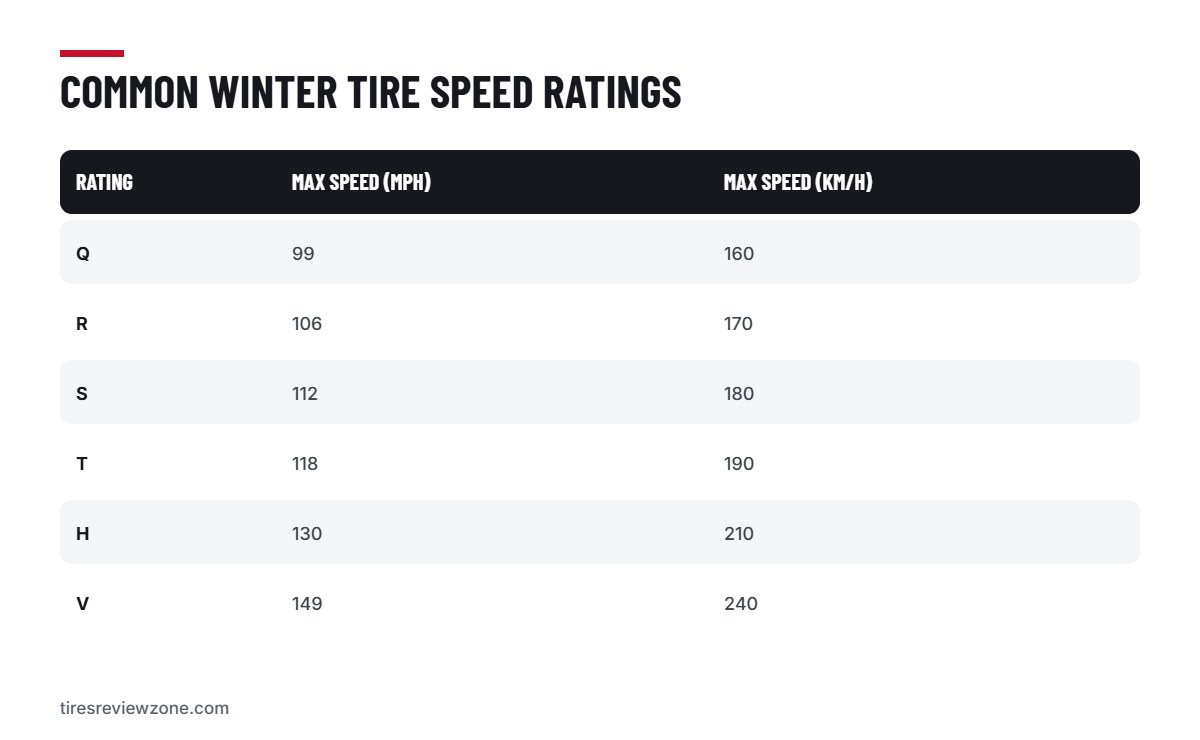
Many winter tires are sold with a lower speed rating than the tires your car came with. That is generally accepted for winter use, as long as you treat the winter tire’s rating as your top speed for as long as they are fitted. BFGoodrich’s speed rating and load index guide explains the trade-off. If you are unsure what each letter means, our tire speed rating guide breaks it down.
Load index is a different matter. Never fit a winter tire with a lower load index than the original equipment, because the tire has to carry the same weight in any season.
Some drivers also go “minus one” on wheel size for winter: for example, a 17-inch wheel instead of an 18-inch one, with a taller sidewall so the overall diameter stays the same. This has three benefits:
- A narrower tire presses harder into the snow instead of floating on top of it.
- The taller sidewall gives more cushion against winter potholes and protects the wheel.
- Smaller winter sizes usually cost less.
Keep the overall diameter within about 3% of stock so your speedometer, ABS and stability control stay accurate. Our tire size calculator does the math for you.
8. Age: why old winter tires lose their grip
Winter compounds work because they stay soft, and rubber slowly hardens as it ages, even on a tire that has barely been driven. A six-year-old set with plenty of tread left can grip noticeably worse on snow and ice than a newer one.
Check the four-digit DOT date code on the sidewall: 4521, for example, means week 45 of 2021. NHTSA notes that some vehicle makers recommend replacing tires six years after they were made, regardless of tread, so check your owner’s manual too.
You can slow the hardening by storing the off-season set clean, dry, out of sunlight and away from electric motors, which give off ozone. See our guide on how to store winter tires. If your set is due for replacement, our picks for the best winter tires for SUVs are a good place to start.
When to fit winter tires
- When daytime temperatures consistently stay below about 45°F (7°C).
- Before the first expected snowfall. Tire shops get busy fast once snow arrives.
- Many drivers buy a second set of wheels so seasonal swaps are quick and cheap.
Not sure if you need them at all? Read all-season vs. winter tires, or browse our winter tire guides. And remember that cold weather drops tire pressure, so check your PSI more often in winter.
Frequently asked questions
Are winter tires worth it with all-wheel drive?
Yes, if you regularly drive in snow or freezing temperatures. AWD helps with acceleration, but braking and cornering depend on the tires.
Can I use just two winter tires?
No. Fit all four. Two winter tires on one axle can make the car spin or understeer unpredictably.
How long do winter tires last?
If you only use them in winter, a set often lasts several seasons. Replace them when tread drops to about 6/32 inch, because snow performance falls off sharply below that.
What is the difference between winter and all-weather tires?
Both carry the 3PMSF symbol, but all-weather tires are designed to stay on all year, while winter tires give more grip in deep snow and on ice and should come off in spring.