
Disclosure: Tires Review Zone is reader-supported. As an Amazon Associate I earn from qualifying purchases, at no extra cost to you. Learn more.

Tire Rack is one of the best-known places to buy tires online in the United States. It sells tires, wheels and accessories, ships them to your home or straight to a local installer, and publishes a large library of tire tests and owner surveys. But is ordering tires online from Tire Rack actually cheaper and easier than walking into a local shop? This guide walks through how it works, what it really costs once installation is added, and who it suits best.
Quick note: Tires Review Zone is independent. We are not affiliated with Tire Rack and this is not a sponsored post. Policies, shipping costs and promotions change, so always confirm the current details on Tire Rack’s website before you order.
Key takeaways
- Tire Rack is strongest on selection and research: huge brand choice, detailed specs, test results and owner ratings in one place.
- The tire price is only part of the bill. Add mounting, balancing, valve stems or TPMS service kits, disposal fees and taxes before comparing with a local quote.
- Shipping to a partner installer is usually the easiest route if you do not want four tires delivered to your door.
- Local shops and warehouse clubs can win on speed, bundled installation and road-hazard plans, so always get at least one local “out-the-door” price.
What is Tire Rack?
Tire Rack was founded in 1979, is headquartered in South Bend, Indiana, and has grown into one of the largest online tire retailers in the US. Since the end of 2021 it has been owned by Discount Tire, but it still trades under its own name (the deal was reported by WFYI at the time). You can browse its range on the official Tire Rack website. Instead of a showroom, you search by vehicle or tire size, compare options online, and have the tires shipped from a regional warehouse. Beyond tires, it sells wheels, wheel-and-tire packages, winter setups, TPMS sensors and other accessories.
What makes it different from a typical online store is the amount of research it publishes: instrumented tire tests, long-form comparisons, and ratings from drivers who have owned the tires. Even if you end up buying locally, those resources can help you narrow down a shortlist.
How ordering tires from Tire Rack works
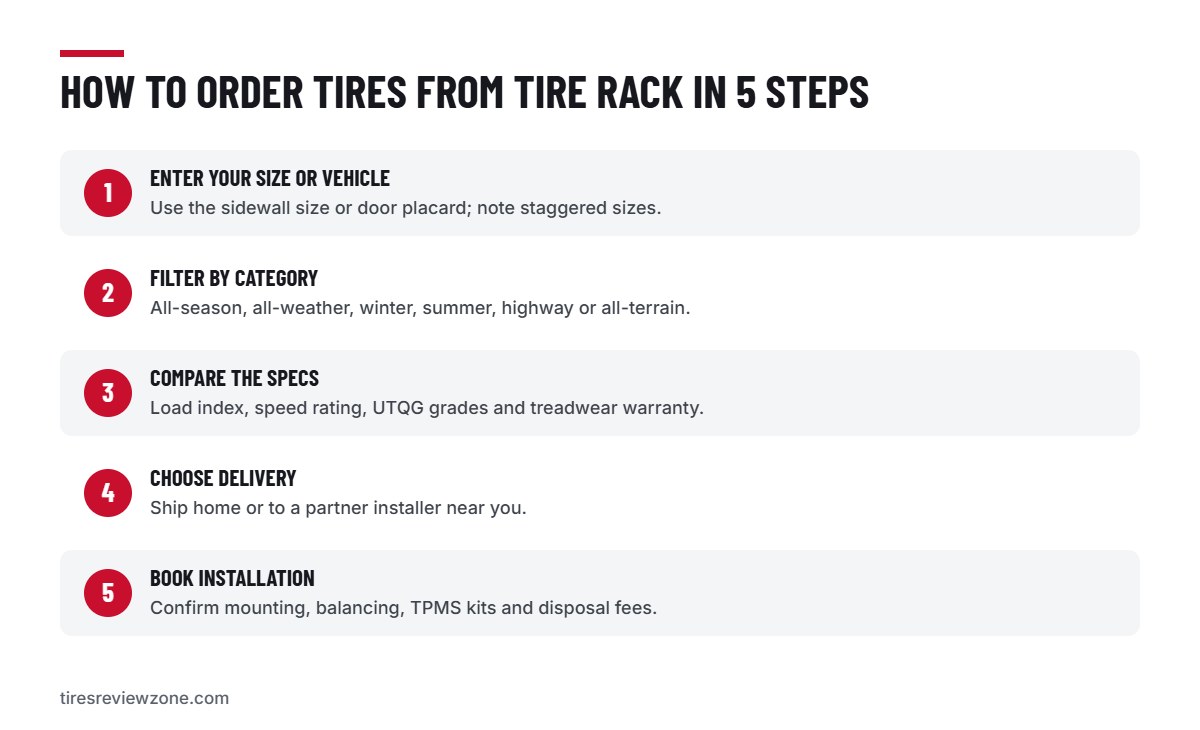
- Enter your vehicle or tire size. Start with the size printed on your current sidewall (for example 225/65R17 102H) or the placard on the driver’s door jamb. Searching by vehicle also flags staggered or optional sizes.
- Filter by category. Choose the type you actually need: all-season, all-weather (three-peak mountain snowflake), winter, summer performance, highway, or all-terrain for trucks and SUVs.
- Compare specs, not just star ratings. Check load index, speed rating, UTQG treadwear and traction grades, and the treadwear warranty. For light trucks and trailers, confirm the load range (C, D or E).
- Pick a delivery option. Ship to your home, or to a partner installer near you so the tires are waiting when you arrive.
- Book installation. Confirm the installer’s price for mounting, balancing, new valve stems or TPMS service kits, and disposal of your old tires.
The real cost: tire price vs. out-the-door price
The most common mistake when buying tires online is comparing an online tire price with a local shop’s installed price. To compare fairly, build an out-the-door total for both:
| Cost item | Buying online (e.g. Tire Rack) | Buying from a local shop |
|---|---|---|
| Four tires | Listed online price | Shop’s tire price |
| Shipping | Check at checkout (varies by size, location and promotions) | Usually none |
| Mounting and balancing | Paid separately to the installer | Often bundled into the price |
| Valve stems / TPMS service kits | Paid to the installer | Often bundled |
| Old tire disposal | Paid to the installer | Often a small listed fee |
| Road-hazard protection | Optional add-on at checkout | Optional, sometimes included |
| Wheel alignment | Recommended with new tires, priced separately | Recommended, priced separately |
Get one written local quote, then add up the online order plus the installer’s fees. Whichever total is lower for the exact same tire and size is your best deal.
Pros of buying tires from Tire Rack
- Wide selection. Many brands and sizes that local shops do not stock, including hard-to-find performance, winter and light-truck sizes.
- Research in one place. Test data, comparisons and owner ratings make it easier to choose the right tire, not just the cheapest.
- Wheel-and-tire packages. Packages arrive mounted and balanced, which is handy for a dedicated winter set.
- No sales pressure. You can compare at your own pace without being upsold at the counter.
Cons to consider
- Two transactions. You buy from one company and pay an installer separately, so you have two businesses to deal with if there is a problem.
- Waiting time. Even with fast shipping, it is slower than a shop that has your size in stock today.
- Installer fees vary. Some shops charge more to install tires bought elsewhere, so call first.
- Warranty claims. Treadwear or road-hazard claims may need paperwork from both the retailer and the installer.
Tire Rack vs. other ways to buy tires
| Option | Best for | Watch out for |
|---|---|---|
| Tire Rack | Research-minded buyers, unusual sizes, winter wheel packages | Separate installation bill and waiting for delivery |
| Local independent shop | Same-day fitting, building a relationship with a mechanic | Smaller selection, prices vary widely |
| Warehouse clubs | Members who want installation, balancing and rotations bundled | Limited brands and appointment wait times |
| Amazon and other online stores | Trailer tires, spares, small tires and accessories | Check DOT date codes and seller ratings |
Tips to get the best value
- Match the load index and speed rating on your placard or go higher, never lower. Our speed rating guide explains the letters.
- Buy for your climate. If you see regular snow, look for the three-peak mountain snowflake symbol (see how winter tires work) or a dedicated winter tire.
- Check the DOT date code after delivery. The last four digits show the week and year the tire was made.
- Look for manufacturer rebates, which often run in spring and fall (more in our guide on the best time to buy tires), and check whether they require a specific card or online claim.
- Budget for an alignment with a new set. It protects your investment from uneven wear; here is how balancing and alignment differ.
When your tires arrive: 4 quick checks
- Confirm the size and ratings on every sidewall match your order, including load index and speed rating. Staggered sets should be labeled front and rear.
- Check the DOT date codes so you know how old the tires are before they are mounted.
- Register the tires with the manufacturer so you are notified about recalls. You can also look up tire recalls on NHTSA’s recall page.
- Keep the invoices from both Tire Rack and the installer. Treadwear and road-hazard claims usually need both.
Not sure the size is right for your car? Check it in our tire size calculator before you mount anything.
Our verdict
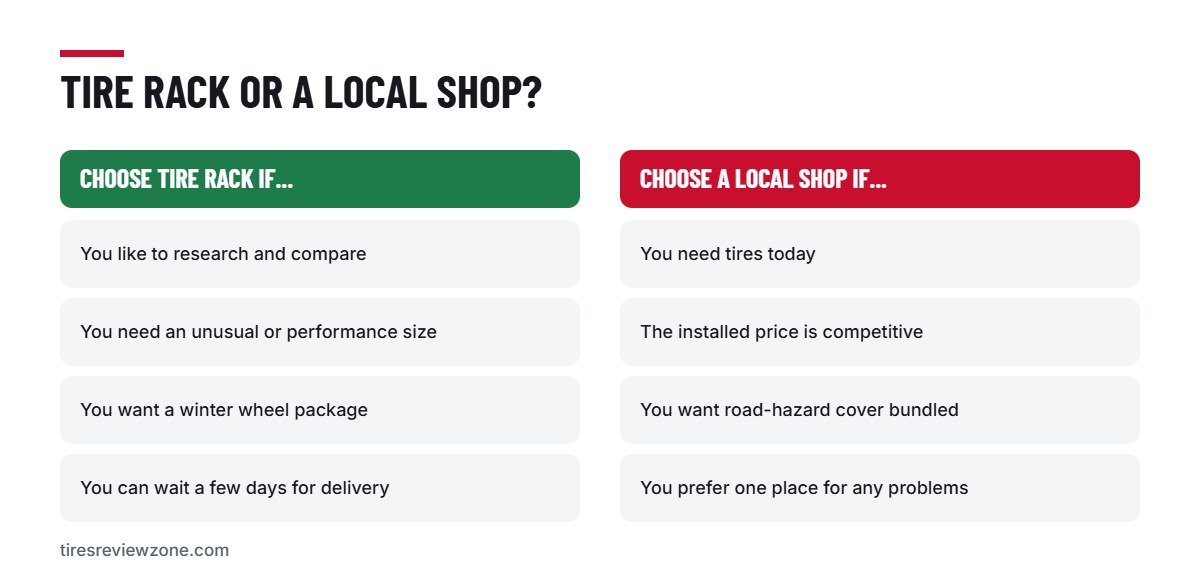
Tire Rack is a great choice if you like to research before you buy, need a less common size, or want a ready-to-fit winter wheel package. If you need tires today, or a local shop offers a competitive installed price with road-hazard cover, buying locally can be simpler. The smart move is to use online tools to choose the right tire, then compare a full out-the-door price both ways.
Frequently asked questions
Is it cheaper to buy tires from Tire Rack?
Sometimes. The tire price is often competitive, but you also pay an installer for mounting, balancing and disposal. Compare the full installed total with a local quote for the exact same tire.
Can Tire Rack ship tires directly to an installer?
Yes. You can choose a partner installer near you at checkout, and the tires are shipped there for your appointment.
Will a local shop install tires I bought online?
Most will, but some charge a higher fee for tires bought elsewhere. Call ahead and ask for the price per tire, including balancing, valve stems or TPMS kits and disposal.
How do I know which tire size to order?
Use the size on the tire placard inside the driver’s door jamb or in your owner’s manual. If your current tires differ from the placard, ask a tire professional before changing size.
Is Tire Rack good for winter tires?
It is a popular choice for winter setups because you can buy tires already mounted on wheels, which makes seasonal swaps quicker and cheaper over time.